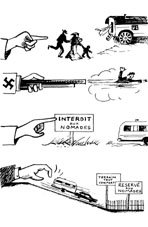
A California appeals court has made the decision that only parents who hold teaching credentials can legally homeschool their children.
"Parents do not have a constitutional right to home school their children," Justice Walter Croskey wrote. The ruling was unanimous.
Many parents in the State are most upset about this ruling, which means they could face potential prosecution if they do not comply with the law. It is estimated more than 160,000 students are homeschooled in California, but, unless the parents hold a teaching degree they break the law under Califirnia's penal code.
The ruling comes from a California child welfare case where two parents homeschooled their eight children without either holding a teaching certificate.
The children were also enrolled in a private school, which considered them a part of their school, although in independent study. The school reported that they visit the children several times a year.
Legitimate Schools, Unqualified Teachers?
The appeals court said the state law on education has been clear since 1953, when another appellate court rejected a separate challenge by parents.
Education officials theorize that some homeschooling parents avoid that law by registering as a private education institution with the state, then only enroll their children.
But to become a teacher in the state, a person must have a bachelor's degree and pass a battery of certification tests.
California's Teachers Union said they were pleased with the court's ruling. One board director said that they believe "students should be taught by credentialed teachers, no matter what the setting."
I do not think that there is any surprise here that the California's Teachers Union and state brainwashers are pleased with this ruling. It would hardly be otherwise.
Homeschooling Effectively Banned
The president of the Home School Legal Defense Association says the ruling would effectively ban homeschooling in the state.
"California is now on the path to being the only state to deny the vast majority of homeschooling parents their fundamental right to teach their own children at home," he said in a statement.
One parent told the San Diego Union-Tribune, "if homeschooling becomes illegal, then it's just going to become underground."
Well, the other option would be, and that would soon teach – pun intended – the State's lawmakers, and that is for those who wish to homeschool their children legally to leave California. A mass exodus of thousands of people would soon, I am sure, carry the message even to the lawmakers and judges with the thickest of skulls.
One legal expert on children's law says the court did not change the law, they only upheld it. She said that "if they want to send them to a private Christian school, they can, but they have to actually go to the school and be taught by teachers."
I do not think that the question here is about a “private Christian school” but about parents exercising their God-given right to teach their own children, and I am saying that without even believing in the God of Abraham. I do, however, believe that the God or the gods, have given parents or guardians the right to teach their own children in the way that they see right and not having to send them to official state brainwash institutions.
© Michael Smith (Veshengro), March 2008

Funding for Gypsy and Traveller sites in London
Communities Minister Iain Wright today announced successful bids for funding from the Gypsy and Traveller Site Grant to help councils improve living conditions on authorised Gypsy and Traveller sites, and provide new pitches to reduce unauthorised camping.
In London Gypsy and Traveller Site Grant totalling £1.3 million has been approved to provide a new site, extend two sites, and support the refurbishment of five sites.
This announcement follows a second round of bidding for the Grant in 2007/8. Across England, since 2006/7, the Government has approved £54.6 million of investment that will provide over 400 additional pitches for Gypsies and Travellers, and refurbish 120 sites.
Schemes have been evaluated by both independent consultants and the Greater London Authority.
 One can but wonder whether this new site is in an equally well chosen location as the one that is shown in the picture by this author. The photo shows the Earlsfield Gypsy Site, which is a council owned site, near Wimbledon, in London.
A further £97 million of funding is available between 2008 -11, and bids are now being invited.
Iain Wright said: "This funding is vital in delivering both new and better sites to ensure that Gypsies and Travellers have authorised, decent places to live and to help reduce the £18 million annual enforcement bill.
"It is important that councils ensure there are enough authorised sites for the Gypsy and Traveller communities. A good supply of legal sites can break the vicious cycle of evictions that is costly in terms of both local tensions and taxpayers' cash.
"We are providing a further £97 million of funding for councils and housing associations over the next three years to help meet the accommodation needs of Gypsies and Travellers.
"I am pleased that the report of the independent Task Group on Site Provision and Enforcement has endorsed our approach to these important issues."
A good idea would be to test out the minister by getting a few Gypsy owned and run housing associations off the ground applying to get land for own sites. We should very soon find that the government is NOT interested in housing assassinations, other than those that are former local council, to run sites. Why not, someone asks? The answer is simple: private sites would not be provided by the local authorities and they have to fulfill a quota under the new legislation to provide x-amount of pitches. That is also the very reason that it is so hard to get planning for small Gypsy-owned sites.
As usual, obviously, the minister is full of himself and the measures by his party's government. Nice talk is all that has so far been provided. Maybe we could get some action and for starters it would be nice if the Gypsy People themselves would have a say as to where the sites go and also would have the right to set up their own sites, with or without financial grants from the government. Our People know where they want to live, and that is NOT next to sewerage works, cement works, tarmac works, under flyovers of motorways, nor on old landfill sites. What is wrong with a Gypsy family buying an on residential caravan park and turning it into a private Gypsy site? It is not a “change of use” because, in my book at least, and in the book of most people, I am sure, a caravan park is a caravan park is a caravan park, regardless who lives there.
© Michael Smith (Veshengro), March 2008
In London Gypsy and Traveller Site Grant totalling £1.3 million has been approved to provide a new site, extend two sites, and support the refurbishment of five sites.
This announcement follows a second round of bidding for the Grant in 2007/8. Across England, since 2006/7, the Government has approved £54.6 million of investment that will provide over 400 additional pitches for Gypsies and Travellers, and refurbish 120 sites.
Schemes have been evaluated by both independent consultants and the Greater London Authority.
 One can but wonder whether this new site is in an equally well chosen location as the one that is shown in the picture by this author. The photo shows the Earlsfield Gypsy Site, which is a council owned site, near Wimbledon, in London.
A further £97 million of funding is available between 2008 -11, and bids are now being invited.
Iain Wright said: "This funding is vital in delivering both new and better sites to ensure that Gypsies and Travellers have authorised, decent places to live and to help reduce the £18 million annual enforcement bill.
"It is important that councils ensure there are enough authorised sites for the Gypsy and Traveller communities. A good supply of legal sites can break the vicious cycle of evictions that is costly in terms of both local tensions and taxpayers' cash.
"We are providing a further £97 million of funding for councils and housing associations over the next three years to help meet the accommodation needs of Gypsies and Travellers.
"I am pleased that the report of the independent Task Group on Site Provision and Enforcement has endorsed our approach to these important issues."
A good idea would be to test out the minister by getting a few Gypsy owned and run housing associations off the ground applying to get land for own sites. We should very soon find that the government is NOT interested in housing assassinations, other than those that are former local council, to run sites. Why not, someone asks? The answer is simple: private sites would not be provided by the local authorities and they have to fulfill a quota under the new legislation to provide x-amount of pitches. That is also the very reason that it is so hard to get planning for small Gypsy-owned sites.
As usual, obviously, the minister is full of himself and the measures by his party's government. Nice talk is all that has so far been provided. Maybe we could get some action and for starters it would be nice if the Gypsy People themselves would have a say as to where the sites go and also would have the right to set up their own sites, with or without financial grants from the government. Our People know where they want to live, and that is NOT next to sewerage works, cement works, tarmac works, under flyovers of motorways, nor on old landfill sites. What is wrong with a Gypsy family buying an on residential caravan park and turning it into a private Gypsy site? It is not a “change of use” because, in my book at least, and in the book of most people, I am sure, a caravan park is a caravan park is a caravan park, regardless who lives there.
© Michael Smith (Veshengro), March 2008


Roma in Europe: MEPs vote on anti-discrimination measures
With 10 million Roma people in the European Union and levels of employment and poverty disproportionately high among them, MEPs on Thursday voted on a European strategy to try and improve the lives of the Roma community. Often discrimination in jobs and schooling are just some of the problems that Roma people face in Europe. Ahead of the vote we spoke to Hungarian MEP's of Roma origin Lívia Járóka and Viktória Mohácsi about the strategy and the situation of the Roma in Europe today.
It is estimated that there are 10 million Roma in the EU. This makes them more numerous than the population of 14 of the Union's 27 members. Roma communities are mainly based in Romania, Bulgaria or in Hungary. In the last four years all these states have joined the EU pushing the issue up the political agenda. Roma often suffer from racial discrimination, poverty and social exclusion.
Ahead of the vote we put some questions to the two MEPs:
The draft resolution recognizes "that the social inclusion of Romani communities is still a goal to be achieved". Why hasn’t this been the case yet?
Viktória Mohácsi (Liberal ALDE) told us that "while Member States recognize the need of integration of Roma, most of them are not taking responsibility for creating steps to solve the problems".
She went on to say that "the lack of minority policy of the EU could also be a possible reason: some countries recognise the Roma as a minority, some of them declare that all people have the same rights according to the constitutions".
LíviaJáróka (EPP-ED): "The successful integration of Europe's youngest and most rapidly thriving minority shouldn't fall victim of narrow-minded party politics, since it would be a national, moreover an all-European interest. Unfortunately parties are afraid of losing their voters by bringing up the Roma issue and also the civil movements are too weak, so there is no real Roma representation".
In many States Roma live in slums and are can be even expelled from the country. What can be done to provide better living conditions?
LíviaJáróka: "The appearance of large migrant groups in Western Europe is the complete failure of the states that they have left. Roma and also non-Roma migrants leave their countries, because of the terrible situation they have to face, namely segregated living conditions and segregated education-systems as well as poverty and social exclusion. Roma people see the country they live in as their motherland and they want to contribute to their societies as well".
"The European Parliament has sent a clear answer when it adopted the resolution on free movement, on November 14, 2007", says Viktória Mohácsi. (This resolution "reaffirm" the value of the free movement of persons as a fundamental principle of the European Union” and advocate the establishment of a network of organisations dealing with the social inclusion of Roma as well as the promotion of awareness-raising instruments regarding the rights and duties of the Roma community).
Ms Mohácsi told us that "in some Member States ignoring the fact that free movement is basic principle for the Roma also. That's why this resolution on European Roma Strategy reflecting on the case of housing is important".
One of the concrete solutions proposed would be micro-credit: can you explain why it can be a solution?
LíviaJáróka: "I believe that a properly elaborated micro-credit scheme might be an important instrument for the empowerment of excluded communities, as the example of Muhammad Yunus and the Grameen Bank (which won the 2006 Nobel peace prize) shows. Micro-credit might be the only tool that can replace usury which is one of the greatest problems within Roma communities".
"In most countries, the unemployment rates amongst Romani communities are still higher than 80%, because of exclusion from the education system. Micro-credit scheme could be one of the adequate possibilities to promote self-employment" says Mohácsi.
Do we need a more collective, pan-European effort to tackle Roma issues?
"Only 5 Member States (out of 27) created an action plan for the integration of Roma but we still do not have a result. Life long learning, anti-discrimination, right to education has to be established on the level of most excluded group of people, too, says Mohácsi.
LíviaJáróka: "This plan should identify and effectively address the practical barriers that Roma face by accessing their unalienable fundamental rights in the fields of housing, employment, health care and education".
Thursday's vote on draft Resolution follows up plenary debate of 16 January 2008 on steps planned to improve the situation of the Roma.
Editorial Comment:
Before anything else we need for the European Union and the European Parliament and its MEPs and officers to understand the very fact that not all of the Romani People are Roma, despite the fact what the idiots with a hidden agenda pedal.
The Sinti and the Cale are separate Romani Nations; separate from the Roma. While we may have a related Culture we do not have an entirely common Culture as there are cultural practices of the Roma that are foreign to the Sinti and the Cale, such as child marriage and bride price. While this is basically the same for all Roma groups the Sinti and the Cale know no bride price, no child marriage and also, basically, no haggled arranged marriage. But that is all that I am prepared to say about the differences, as much does not belong into the world of the Gadje. Suffice to say that there are profound cultural differences twixt Sinti and Cale one the one side and Roma on the other. So we cannot, therefore, that is the Sinti and the Cale, be a tribe of the Roma. Dosta penauas!
Michael Smith (Veshengro), March 2008
It is estimated that there are 10 million Roma in the EU. This makes them more numerous than the population of 14 of the Union's 27 members. Roma communities are mainly based in Romania, Bulgaria or in Hungary. In the last four years all these states have joined the EU pushing the issue up the political agenda. Roma often suffer from racial discrimination, poverty and social exclusion.
Ahead of the vote we put some questions to the two MEPs:
The draft resolution recognizes "that the social inclusion of Romani communities is still a goal to be achieved". Why hasn’t this been the case yet?
Viktória Mohácsi (Liberal ALDE) told us that "while Member States recognize the need of integration of Roma, most of them are not taking responsibility for creating steps to solve the problems".
She went on to say that "the lack of minority policy of the EU could also be a possible reason: some countries recognise the Roma as a minority, some of them declare that all people have the same rights according to the constitutions".
LíviaJáróka (EPP-ED): "The successful integration of Europe's youngest and most rapidly thriving minority shouldn't fall victim of narrow-minded party politics, since it would be a national, moreover an all-European interest. Unfortunately parties are afraid of losing their voters by bringing up the Roma issue and also the civil movements are too weak, so there is no real Roma representation".
In many States Roma live in slums and are can be even expelled from the country. What can be done to provide better living conditions?
LíviaJáróka: "The appearance of large migrant groups in Western Europe is the complete failure of the states that they have left. Roma and also non-Roma migrants leave their countries, because of the terrible situation they have to face, namely segregated living conditions and segregated education-systems as well as poverty and social exclusion. Roma people see the country they live in as their motherland and they want to contribute to their societies as well".
"The European Parliament has sent a clear answer when it adopted the resolution on free movement, on November 14, 2007", says Viktória Mohácsi. (This resolution "reaffirm" the value of the free movement of persons as a fundamental principle of the European Union” and advocate the establishment of a network of organisations dealing with the social inclusion of Roma as well as the promotion of awareness-raising instruments regarding the rights and duties of the Roma community).
Ms Mohácsi told us that "in some Member States ignoring the fact that free movement is basic principle for the Roma also. That's why this resolution on European Roma Strategy reflecting on the case of housing is important".
One of the concrete solutions proposed would be micro-credit: can you explain why it can be a solution?
LíviaJáróka: "I believe that a properly elaborated micro-credit scheme might be an important instrument for the empowerment of excluded communities, as the example of Muhammad Yunus and the Grameen Bank (which won the 2006 Nobel peace prize) shows. Micro-credit might be the only tool that can replace usury which is one of the greatest problems within Roma communities".
"In most countries, the unemployment rates amongst Romani communities are still higher than 80%, because of exclusion from the education system. Micro-credit scheme could be one of the adequate possibilities to promote self-employment" says Mohácsi.
Do we need a more collective, pan-European effort to tackle Roma issues?
"Only 5 Member States (out of 27) created an action plan for the integration of Roma but we still do not have a result. Life long learning, anti-discrimination, right to education has to be established on the level of most excluded group of people, too, says Mohácsi.
LíviaJáróka: "This plan should identify and effectively address the practical barriers that Roma face by accessing their unalienable fundamental rights in the fields of housing, employment, health care and education".
Thursday's vote on draft Resolution follows up plenary debate of 16 January 2008 on steps planned to improve the situation of the Roma.
Editorial Comment:
Before anything else we need for the European Union and the European Parliament and its MEPs and officers to understand the very fact that not all of the Romani People are Roma, despite the fact what the idiots with a hidden agenda pedal.
The Sinti and the Cale are separate Romani Nations; separate from the Roma. While we may have a related Culture we do not have an entirely common Culture as there are cultural practices of the Roma that are foreign to the Sinti and the Cale, such as child marriage and bride price. While this is basically the same for all Roma groups the Sinti and the Cale know no bride price, no child marriage and also, basically, no haggled arranged marriage. But that is all that I am prepared to say about the differences, as much does not belong into the world of the Gadje. Suffice to say that there are profound cultural differences twixt Sinti and Cale one the one side and Roma on the other. So we cannot, therefore, that is the Sinti and the Cale, be a tribe of the Roma. Dosta penauas!
Michael Smith (Veshengro), March 2008
MEPs highlight "ghettoisation" of Roma and call for EU anti-discrimination measures
The European Parliament adopted a report warning of the risks of anti-Gypsyism promoted by extremists and calling for fresh efforts to integrate Roma through positive measures in housing, health, education and employment. Of the 12 to 15 million Roma living in Europe, about 10 million live in EU countries. The majority became EU citizens after the 2004 and 2007 enlargements. Yet MEPs believe Roma communities still suffer clear discrimination.
"Anti-Gypsyism or Romaphobia is still widespread in Europe and is promoted and used by extremists, which can culminate in racist attacks, hate speech, physical attacks, unlawful evictions and police harassment", warn MEPs in an own-initiative report adopted by 510 votes to 36, with 67 abstentions. The situation of European Roma communities is distinct from other national minorities, they say, arguing that this justifies specific measures at European level. Highlighting the "lack of progress made in combating racial discrimination against the Roma" in Europe, the resolution points out that, in the negotiation and accession process, all candidate countries committed to improving the inclusion of this community. It asks "the European Commission to make an assessment of the implementation of those commitments and of the current situation of the Roma in all EU Member States".
Parliament also maintains that "the Romani holocaust (Porajmos) deserves full recognition commensurate with the gravity of Nazi crimes" and, among many other measures, calls on the relevant authorities "to abolish the pig fattening industry on the former concentration camp in Lety (Czech Republic) and to create a memorial to honour the victims of persecution".
Housing
MEPs believe that "evidence of ghettoisation exist on a wide scale", with Roma regularly being either victims of forced evictions or prevented from moving out of such neighbourhoods. The Commission should therefore support active programmes to end Romani slums and provide housing for Roma citizens. Parliament also urged Member States to solve the problem of camps, "where there are no hygienic and safety standards at all and where a large number of Romani children die in domestic accidents, particularly fires".
Health
Member States need to improve the health situation of Roma communities, say MEPs, and "remedy without delay the systemic exclusion" of certain Roma communities from health care. In addition, "extreme human rights abuses (...) including racial segregation in health facilities and coercive sterilisation of Romani women" must be ended.
Education
Deploring the fact that segregation in education is still tolerated in the Member States, MEPs call on the Commission to look for new ways of tightening up anti-discrimination legislation in this field and to report back to the EP within one year. They believe positive action is needed in most areas of education and vocational training.
Employment
The Roma community also suffers "unacceptably high levels of unemployment", according to the resolution. The Commission is urged to support the integration of the Roma into the labour market through training, retraining and other measures, and also to consider granting micro-credits to Roma to help them start up small businesses.
Go local
While the EU and the Member States have crucial roles to play in key policy areas, MEPs also stress the need to involve local authorities in all active measures to integrate the Roma.
Measures within the European Commission
Lastly, MEPs urge the Commission to "shape a Community Action Plan on Roma Inclusion", to give one Commissioner "responsibility for coordinating a Roma policy" and "to promote Roma staff within its structure".
Editorial Comment:
As the MEPs keep mentioning the Roma Community this can lead the reader of the document released by the European Parliament to believe that it is ONLY the Roma that are thus affected and not the like of Sinti and Cale who, and the EU will never understand that as long as those with a hidden agenda keep telling them that Sinti and Cale are but tribes of the Roma, are NOT Roma but Romani. While all Roma are Romani not all Romani are Roma.
I guess this is difficult to understand, and then again, we, the People, don't know what we are talking about as the Romani Institute and the Gypsy Union we told by officers of the EU and the Parliament. They know better than us that all Sinti and Cale are part of the Roma.
We must also remember that they know everything so well that they have included the Irish Travellers I amongst the tribes of the Roma.
Michael Smith (Veshengro), March 2008
"Anti-Gypsyism or Romaphobia is still widespread in Europe and is promoted and used by extremists, which can culminate in racist attacks, hate speech, physical attacks, unlawful evictions and police harassment", warn MEPs in an own-initiative report adopted by 510 votes to 36, with 67 abstentions. The situation of European Roma communities is distinct from other national minorities, they say, arguing that this justifies specific measures at European level. Highlighting the "lack of progress made in combating racial discrimination against the Roma" in Europe, the resolution points out that, in the negotiation and accession process, all candidate countries committed to improving the inclusion of this community. It asks "the European Commission to make an assessment of the implementation of those commitments and of the current situation of the Roma in all EU Member States".
Parliament also maintains that "the Romani holocaust (Porajmos) deserves full recognition commensurate with the gravity of Nazi crimes" and, among many other measures, calls on the relevant authorities "to abolish the pig fattening industry on the former concentration camp in Lety (Czech Republic) and to create a memorial to honour the victims of persecution".
Housing
MEPs believe that "evidence of ghettoisation exist on a wide scale", with Roma regularly being either victims of forced evictions or prevented from moving out of such neighbourhoods. The Commission should therefore support active programmes to end Romani slums and provide housing for Roma citizens. Parliament also urged Member States to solve the problem of camps, "where there are no hygienic and safety standards at all and where a large number of Romani children die in domestic accidents, particularly fires".
Health
Member States need to improve the health situation of Roma communities, say MEPs, and "remedy without delay the systemic exclusion" of certain Roma communities from health care. In addition, "extreme human rights abuses (...) including racial segregation in health facilities and coercive sterilisation of Romani women" must be ended.
Education
Deploring the fact that segregation in education is still tolerated in the Member States, MEPs call on the Commission to look for new ways of tightening up anti-discrimination legislation in this field and to report back to the EP within one year. They believe positive action is needed in most areas of education and vocational training.
Employment
The Roma community also suffers "unacceptably high levels of unemployment", according to the resolution. The Commission is urged to support the integration of the Roma into the labour market through training, retraining and other measures, and also to consider granting micro-credits to Roma to help them start up small businesses.
Go local
While the EU and the Member States have crucial roles to play in key policy areas, MEPs also stress the need to involve local authorities in all active measures to integrate the Roma.
Measures within the European Commission
Lastly, MEPs urge the Commission to "shape a Community Action Plan on Roma Inclusion", to give one Commissioner "responsibility for coordinating a Roma policy" and "to promote Roma staff within its structure".
Editorial Comment:
As the MEPs keep mentioning the Roma Community this can lead the reader of the document released by the European Parliament to believe that it is ONLY the Roma that are thus affected and not the like of Sinti and Cale who, and the EU will never understand that as long as those with a hidden agenda keep telling them that Sinti and Cale are but tribes of the Roma, are NOT Roma but Romani. While all Roma are Romani not all Romani are Roma.
I guess this is difficult to understand, and then again, we, the People, don't know what we are talking about as the Romani Institute and the Gypsy Union we told by officers of the EU and the Parliament. They know better than us that all Sinti and Cale are part of the Roma.
We must also remember that they know everything so well that they have included the Irish Travellers I amongst the tribes of the Roma.
Michael Smith (Veshengro), March 2008
Romanichal boy after Beijing Olympic gold
 Billy Joe Saunders' great grandfather was a bare-knuckle champion of the Gypsy fairground booths and Billy Joe is being tipped for boxing stardom of a more conventional kind - by winning an Olympic welterweight medal with a pair of gloves on his fists.
Billy Joe, who is 18, and lives with his family on a Gypsy caravan site on the outskirts of Hatfield in Hertfordshire, boxes out of the Hoddesdon Club, is already being compared with Amir Khan since he has moved from the junior to the senior ranks six months ago.
Since that time he has won 26 bouts out of 26, culminating in the gold medal at one of Europe's most prestigious tournaments in Bulgaria, where his four scalps in the space of four days included that of the highly rated Cuban No 1, Carlos Bantuer. His performance earned him the boxer of the tournament award.
Billy Joe was originally selected for Britain's Olympic development squad for the 2012 London Olympics, but he has now been fast-tracked into the 2008 "podium group".
A top-three finish will guarantee him a place in Beijing alongside the four British boxers who have already qualified via the World Championships in Chicago last October.
Let us cross our fingers for this young champ from the British Romani-Gypsy Community and hopefully he will not only make it to Beijing but bring home gold for the country and for our People.
Go – Billy Joe – Go!
© Michael Smith (Veshengro), March 2008
The Word “Gadje”
It is claimed by the supposed experts in Romani Studies that the word “Gadje” originates with the name of Mahmud Of Ghazni (who lived from 971 A.D. - 1030 A.D), the Muslim raider – a raider after gold who, according to reports, never seem to actually have taken slaves – who harassed India in the early 11th century. His son later settled in India and became a Sufi saint.
Those raids into India by Mahmud Of Ghazni are well after the time that the Rom must have left for, according to the International Romani Union the year 2001 was the Millennium of Rom in Europe. Apparently the Rom entered Europe from Asian Constantinople at the year 1001. This, in fact, were the Roma and not those that already were in Europe, such as the Sinti groups. It is high time for a rethink, methinks, for those that think they know and for the truth being told to the world.
How, pray, would anyone, even allowing for pronunciation shifts and the like, arrive from the place name of Ghanzi at the word “Gadjo/Gadji/Gadje” for non-Romani or outsiders from the People? Gadje does simply mean farmer or peasant and originates, in the same was as the word Chalo or Xalo or Xulaj with the lanfuages of the area from whence our People come, meaning, the same as the Romani-Calo word “payo”, basically “peasant”. All the clap-trap of the linguists and experts in Romani studies just does not add up to me, and I also believe it does not to many others that have an open mind amongst the People.
Sure I do not have proof for this, before anyone asks. All I am doing is to get you, dearest readers, to think as to whether things are as clearcut as the experts would want us to believe and it certainly is not. Somewhere along the line there seems to be a hidden agenda amongst the so-called experts on the Romani for all try their hardest to make everyone believe that – one – we are all Roma and that – two – we all left India together at the same time, at the time of Mahmud Of Ghazni's raids into India, and that it then took us just a few weeks or months to arrive at the Bosporus. And bawle fly, certainly.
Just think on it...
© Michael Smith (Veshengro), March 2008
Those raids into India by Mahmud Of Ghazni are well after the time that the Rom must have left for, according to the International Romani Union the year 2001 was the Millennium of Rom in Europe. Apparently the Rom entered Europe from Asian Constantinople at the year 1001. This, in fact, were the Roma and not those that already were in Europe, such as the Sinti groups. It is high time for a rethink, methinks, for those that think they know and for the truth being told to the world.
How, pray, would anyone, even allowing for pronunciation shifts and the like, arrive from the place name of Ghanzi at the word “Gadjo/Gadji/Gadje” for non-Romani or outsiders from the People? Gadje does simply mean farmer or peasant and originates, in the same was as the word Chalo or Xalo or Xulaj with the lanfuages of the area from whence our People come, meaning, the same as the Romani-Calo word “payo”, basically “peasant”. All the clap-trap of the linguists and experts in Romani studies just does not add up to me, and I also believe it does not to many others that have an open mind amongst the People.
Sure I do not have proof for this, before anyone asks. All I am doing is to get you, dearest readers, to think as to whether things are as clearcut as the experts would want us to believe and it certainly is not. Somewhere along the line there seems to be a hidden agenda amongst the so-called experts on the Romani for all try their hardest to make everyone believe that – one – we are all Roma and that – two – we all left India together at the same time, at the time of Mahmud Of Ghazni's raids into India, and that it then took us just a few weeks or months to arrive at the Bosporus. And bawle fly, certainly.
Just think on it...
© Michael Smith (Veshengro), March 2008
The Rom and Metalworking
Some supposed learned experts on the Romani People claim that the Rom were/are low caste, or untouchables – Pariah – even because of the fact that many were/are workers in metals, such as iron, copper, brass, gold, to mention but a few.
What I fail to understand is how they could ever have arrived at such a conclusion seeing that the metalworkers in India of old were held in the highest esteem. Do we really believe that a high caste warrior would have ever put on an armor that was smithed by a low caste or even untouchable? This is entirely unthinkable.
It is therefore not possible that the Rom, our People, were at the bottom of the ladder, so to speak, and, as metalworkers could have been of the low caste or even untouchables.
According to an old venerable Hindu I knew many years back iron would not have been allowed to be worked, in those days, by low caste or untouchables because, so I was told, iron was/is regarded as a sacred metal, a metal from the gods.
During the times before Mohammed of Ghanzi India was the center of metalworking and fantastic works were cerated in iron and gold and other metals. Pillars of tens of meters in height were built using the forge-welding technique and those pillars and towers are absolutely awesome.
The Rom never left “India” in one single wave but, as all people tended to move about, in trickles and small waves. But I digressed.
The Rom were once some of the finest metalsmiths and were, in many places, armorers to the feudal houses and even to the courts of kings and emperors. The quality of the knives and swords was some of the finest in the world and, while I may go out here on a limb, lookin gat the names of many, I believe that many of the great knifemakers of Solingen, Klingenthal, and also Sheffield, were of the Romani-Gypsy People. Have I go proof for that? No, with the exception of the names of the knife making companies, especially the names of their founders and owners.
This is yet another thing, like with the arrival of the Romani-Gypsy in Germany, where the assumptions of the experts do not seem to bear out the factors of life.
Think about it...
© Michael Smith (Veshengro), March 2008
What I fail to understand is how they could ever have arrived at such a conclusion seeing that the metalworkers in India of old were held in the highest esteem. Do we really believe that a high caste warrior would have ever put on an armor that was smithed by a low caste or even untouchable? This is entirely unthinkable.
It is therefore not possible that the Rom, our People, were at the bottom of the ladder, so to speak, and, as metalworkers could have been of the low caste or even untouchables.
According to an old venerable Hindu I knew many years back iron would not have been allowed to be worked, in those days, by low caste or untouchables because, so I was told, iron was/is regarded as a sacred metal, a metal from the gods.
During the times before Mohammed of Ghanzi India was the center of metalworking and fantastic works were cerated in iron and gold and other metals. Pillars of tens of meters in height were built using the forge-welding technique and those pillars and towers are absolutely awesome.
The Rom never left “India” in one single wave but, as all people tended to move about, in trickles and small waves. But I digressed.
The Rom were once some of the finest metalsmiths and were, in many places, armorers to the feudal houses and even to the courts of kings and emperors. The quality of the knives and swords was some of the finest in the world and, while I may go out here on a limb, lookin gat the names of many, I believe that many of the great knifemakers of Solingen, Klingenthal, and also Sheffield, were of the Romani-Gypsy People. Have I go proof for that? No, with the exception of the names of the knife making companies, especially the names of their founders and owners.
This is yet another thing, like with the arrival of the Romani-Gypsy in Germany, where the assumptions of the experts do not seem to bear out the factors of life.
Think about it...
© Michael Smith (Veshengro), March 2008
Gypsy Arrival in Germany
The year 1407 is regarded by the experts as the day that Sinti, then still calling themselves “Zigeuner”, have arrived in Germany. However, that year only marks them turning up in the register as having attended the Eichamt, the local office of the approval of weights and measures, in the city of Hildesheim, where there is a bill in the archives that mentions a groups of Gypsies having had some measuring tools approved.
How does that make for the year of arrival? In my view this actually points to the fact that Zigeuner, Gypsies, have been in Germany, and elsewhere in Europe, well before that time, and arrived much earlier.
It is absolute stupidity and narrow mindedness to run with this date and year as the arrival year of Zigeuner, Gypsies, in Germany. It just does not compute. Does no one realize that? But then, it suits the experts in order to support their theories as to when the Romani People left the area between the Caucasus and the Indus Valley.
What language would those Zigeuner that went to the Eichamt in Hildesheim have spoken and understood? This certainly cannot be a group of people that have just arrived in medieval Germany speaking the Romani tongue, or, if lucky, some Turkish or Greek. Local government offices and Landjaeger, the military style police, or it may have even been Shire Reeves, like in Britain, from the name of which derives the word Sheriff in the English language, in that period would, I am sure, not have understood or spoken Romani nor Greek or even Latin in order to tell them that they have to have their measuring tools approved by the Eichamt. The Gypsies certainly would not have understood any of the ancient German dialects, akin, probably, to old Anglo-Saxon, either had they just arrived. So, what then? This points, in fact, to a group of Gypsy People who have been living in the German realm for some considerable time, generations probably if not even longer.
To take the date of 1407 when those Zigeuner, those Gypsy People, had to attend the Eichamt to have their measuring tools approved as the date of Gypsy arrival in Germany makes absolutely no sense and is nonsense. Think about it from the point of understanding of language, as I said in the previous paragraph.
Think about it...
© Michael Smith (Veshengro), March 2008
How does that make for the year of arrival? In my view this actually points to the fact that Zigeuner, Gypsies, have been in Germany, and elsewhere in Europe, well before that time, and arrived much earlier.
It is absolute stupidity and narrow mindedness to run with this date and year as the arrival year of Zigeuner, Gypsies, in Germany. It just does not compute. Does no one realize that? But then, it suits the experts in order to support their theories as to when the Romani People left the area between the Caucasus and the Indus Valley.
What language would those Zigeuner that went to the Eichamt in Hildesheim have spoken and understood? This certainly cannot be a group of people that have just arrived in medieval Germany speaking the Romani tongue, or, if lucky, some Turkish or Greek. Local government offices and Landjaeger, the military style police, or it may have even been Shire Reeves, like in Britain, from the name of which derives the word Sheriff in the English language, in that period would, I am sure, not have understood or spoken Romani nor Greek or even Latin in order to tell them that they have to have their measuring tools approved by the Eichamt. The Gypsies certainly would not have understood any of the ancient German dialects, akin, probably, to old Anglo-Saxon, either had they just arrived. So, what then? This points, in fact, to a group of Gypsy People who have been living in the German realm for some considerable time, generations probably if not even longer.
To take the date of 1407 when those Zigeuner, those Gypsy People, had to attend the Eichamt to have their measuring tools approved as the date of Gypsy arrival in Germany makes absolutely no sense and is nonsense. Think about it from the point of understanding of language, as I said in the previous paragraph.
Think about it...
© Michael Smith (Veshengro), March 2008

National gathering of Catholic Gypsy and Traveller support network
The 2008 national gathering of the Catholic Gypsy and Traveller support network takes place at the Focolare Centre for Unity in Welwyn Garden City from Wednesday 5 to Thursday 6 March.
The gathering will bring together priests, religious and lay people who provide services to or are involved in a ministry to Gypsies and Travellers and others who are sympathetic to their concerns. It will provide an opportunity for informal sharing and for exploring issues of common interest.
To find out more contact Liz Taite on 020 7901 4828.
I hate to be a cynical person but why all of a sudden the great interest of the Catholic Church in Gypsies (and Travellers). I can understand that they want to minister to the Irish Travellers as most if not all of them are Irish Catholics but why the interest, suddenly, in the Gypsy, the Romani?
Mind you, I rather have the Catholic Church than the Pentecostalists any day, but I am just asking...
Michael Smith (Veshengro), March 2008
The gathering will bring together priests, religious and lay people who provide services to or are involved in a ministry to Gypsies and Travellers and others who are sympathetic to their concerns. It will provide an opportunity for informal sharing and for exploring issues of common interest.
To find out more contact Liz Taite on 020 7901 4828.
I hate to be a cynical person but why all of a sudden the great interest of the Catholic Church in Gypsies (and Travellers). I can understand that they want to minister to the Irish Travellers as most if not all of them are Irish Catholics but why the interest, suddenly, in the Gypsy, the Romani?
Mind you, I rather have the Catholic Church than the Pentecostalists any day, but I am just asking...
Michael Smith (Veshengro), March 2008
The Storm Kettle – Product Review
 Originally, the Storm Kettle was handmade in Ireland - often by travellers who produced them in copper - for fishermen, itinerant workers and tourists. John Grindlay, who with his wife owns and runs the Eydon Kettle Company, modified the design and implemented modern manufacturing techniques in the early 1960’s.
John Grindlay borrowed an original copper kettle and took it to England during the winter. Tooling was manufactured and the first 10 kettles eventually produced. These were very quickly sold for £10 each in 1979, the assembly work being carried out by Mr Grindlay’s children who were then 8 years and 10 years old. Popular demand meant that production had to increase. Since 1979 the numbers sold have substantially increased each year.
Mainly these Kettles, whether sold in the UK, Germany, or elsewhere, are used by sportsmen, holiday makers, expedition organisers and outdoor enthusiasts. They have even accompanied the explorer John Blashford-Snell, while he was searching for signs of early civilisations on a trip to Central America.
Nowadays they can be found in the Solomon Isles helping remote islanders boil water to purify it, in remote parts of Southern Africa, where dried cattle dung is used by the Zulus as fuel, or in the Sahara Desert on expeditions.
Using a Storm Kettle means you can boil water easily, in the wettest and windiest of weather, both rapidly and safely. They are also environmentally friendly as you only need a sheet of newspaper and a handful of twigs as fuel. So the simplicity of the Kettle ensures that boiling water is always available, without the need to use gas, petrol or any other artificial fuel.
Storm Kettles come in two sizes, the Original and the Popular. The Original will boil up to 2.5 pints (approx. 1.5 litres) the Popular up to 2 pints (approx. one litre) – that should ensure more than enough hot water is available for you within minutes - at any time.
The water boils rather quickly and can be kept going by just adding further small sticks into the fire that is going in the burner beneath the kettle via the “chimney”.
One word of warning even though it is mentioned more than once in the literature and also on a sticker on the kettle itself: NEVER EVER use it with the cork in place. While the cork is very handy for carrying the kettle with water in it when heating the water the cork must be taken out of the spout.
I am always amazed though that they never seem to have found a take up by the still travelling Romani in the UK and elsewhere. The Storm Kettle does away with the need for a fire for just the purpose of brewing a cup of tea or coffee or even for the making of some other hot beverage. I can but highly recommend them for our use as well.
While the Storm Kettle and accessories do not come cheap they certainly do not cost a fortune and will save a lot of trouble for those of ours that are, even if only occasionally, still po drom.
The Prices for the kettles are: £43.00 for the Popular and £44.50 for the Original. Prices include V.A.T. and carriage.
Reviewed by Michael Smith (Veshengro), February 2008
Bosnia and Herzegovina: Commissioner Hammarberg recommends stronger efforts
Strasbourg, 20.02.2008 - The Council of Europe's Commissioner for Human Rights, Thomas Hammarberg, today presented his human rights assessment report on Bosnia and Herzegovina.
Whilst underlining that the authorities have ratified key European and international human rights treaties and adopted legislation and action plans in important areas, Mr Hammarberg highlighted the need for further efforts to ensure concrete implementation of the reforms. His recommendations focus on internally-displaced persons and minority returnees, Roma, children, poverty and social exclusion.
The Commissioner considers that the effects of years of conflict have contributed to persisting poverty, social exclusion and inequality; social assistance is not distributed fairly and elderly people, single-parent families and people without health insurance coverage are particularly vulnerable and risk destitution.
He stated that further efforts are needed to facilitate return of people who were displaced during the conflict and that appropriate housing, infrastructure and services should be offered without discrimination to all returnees. Commissioner Hammarberg also urges national authorities to provide assistance and integration opportunities for those who cannot return to their places of origin.
Refugees who have been under temporary protection should be offered a durable solution, particularly those for whom return to Kosovo is not yet possible. Legal safeguards should be introduced to protect persons deprived of citizenship from being returned to countries where they would be at risk.
Furthermore, the Commissioner recommends more positive action for the protection of national minorities. The rights of Roma to education, employment, health and housing rights should be given priority. The report also sets out specific recommendations to combat violence against women and children.
The Commissioner recommends swift action to finally establish the office of the ombudsman at a State level. While he notes progress in the judiciary with regard to independence and professionalism, Mr Hammarberg expresses concern about the huge backlog of cases in the courts. There is an urgent need for an action plan to remedy this problem, he suggests.
The report, based on the findings of an official visit to Bosnia and Herzegovina in June 2007, is available on the Commissioner's website (www.commissioner.coe.int ).
Whilst underlining that the authorities have ratified key European and international human rights treaties and adopted legislation and action plans in important areas, Mr Hammarberg highlighted the need for further efforts to ensure concrete implementation of the reforms. His recommendations focus on internally-displace
The Commissioner considers that the effects of years of conflict have contributed to persisting poverty, social exclusion and inequality; social assistance is not distributed fairly and elderly people, single-parent families and people without health insurance coverage are particularly vulnerable and risk destitution.
He stated that further efforts are needed to facilitate return of people who were displaced during the conflict and that appropriate housing, infrastructure and services should be offered without discrimination to all returnees. Commissioner Hammarberg also urges national authorities to provide assistance and integration opportunities for those who cannot return to their places of origin.
Refugees who have been under temporary protection should be offered a durable solution, particularly those for whom return to Kosovo is not yet possible. Legal safeguards should be introduced to protect persons deprived of citizenship from being returned to countries where they would be at risk.
Furthermore, the Commissioner recommends more positive action for the protection of national minorities. The rights of Roma to education, employment, health and housing rights should be given priority. The report also sets out specific recommendations to combat violence against women and children.
The Commissioner recommends swift action to finally establish the office of the ombudsman at a State level. While he notes progress in the judiciary with regard to independence and professionalism, Mr Hammarberg expresses concern about the huge backlog of cases in the courts. There is an urgent need for an action plan to remedy this problem, he suggests.
The report, based on the findings of an official visit to Bosnia and Herzegovina in June 2007, is available on the Commissioner'
Abandoned in Kosovo
Those European countries which are in such a hurry to recognise Kosovo's independence should also stand up for its beleaguered minorities, of which there are a few.
For almost a decade western attitudes to Kosovo have reinforced the adage that the truth is rarely pure and never simple. As far as Kosovo and the Albanians is and was concerned there truth that was presented to the West was not the truth at all. The West, for some stupid reason, however, swallowed it hook, line and sinker.
In 1999, George Robertson, then Britain's defence secretary, claimed that Nato had undertaken a "fight for a downtrodden people and it has won". The question is who were the downtrodden people that he was referring to?
While it is claimed, and to some extent some of it may indeed be true, that forces controlled by Slobodan Milosevic were responsible for heinous crimes against the ethnic Albanian community that Robertson purported to champion, the fact is, and this was borne out by comments of the KOFOR troops, including high ranking officers, who stated “my God, we backed the wrong side”, as they saw what really had been going on.
In the security vacuum that followed Nato's "victory", there was a wave of violence against Kosovo's minorities: the Roma, Ashkali and Egyptians (three groups often described as "Gypsies") and the Serbs. By some estimates, up to four-fifths of the 120,000-strong Roma community were driven from their homes in an true effort of ethnic cleansing. A litany of killings, arson and rape has been documented - in many cases allegedly perpetrated by members of the Kosovo Liberation Army (Hashim Thaci, the KLA's political leader at the time, is now prime minister). The majority of Gypsy Mahallas in Kosovo are nowadays ruins and shells and still people are being sent there to be attacked again and often killed.
It has always been the aim of the KLA and those associated with them, but also others that were working on the “liberation” of Kosovo to have a Kosovo for Albanians only and to drive all non-Albanians out and then attach Kosovo to a “Greater Albania”; only they are not going to admit to this now, are they.
Those who fled Kosovo have been reluctant to return and it is not hard to grasp why. Facing almost total unemployment and a dearth of social services, some Roma in Kosovo have been reduced to living on scraps of food from rubbish containers. With a principal Roma neighbourhood in Mitrovica almost completely destroyed in 1999, many of those remaining have been forced into substandard shelter by the UN in an area of toxic contamination which they are not, so it is reported again and again, permitted to leave. Illness is unsurprisingly widespread. All those “refugee camps” are under UN control.
Surely, there is an onus on those European countries who supported the Nato campaign and are now recognising Kosovo's independence to stand up for its beleaguered minorities. How can it be, then, that some of the same countries have made the plight of those the minorities even worse?
UN data indicates that about 2,000 people were forcibly sent back to Kosovo from other parts of Europe last year and more than 3,500 in 2006. A further 90,000 could still be deported, Ban Ki-Moon, the UN secretary-general, has said.
In 1999, Germany's involvement in the Nato effort caused ructions among its Green party, which then belonged to the ruling coalition. To its shame, Germany has been happy to expel significant numbers of Kosovars who have sought refuge on its soil. According to reports, those expelled have included people suffering from trauma who will almost certainly not receive the specialist care they need upon return. But then Germany always likes to get rid of the “Gypsy problem” fast regardless as to whether it is safe for those Gypsies to return or not, as was shown in the 1980's with the Roma and Sinti from Macedonia.
These expulsions disregard warnings by the UN's refugee agency that Serbs and Roma risk persecution if forcibly returned. Similar conclusions have been drawn by Kosovo's ombudsman, who found that returnees continue to be stoned on buses and have their property attacked. In 2006, some returnees were murdered and bombed, he added, and while such incidents had not reoccurred by the time his latest annual report was published, fear that they will persists.
Amnesty International, meanwhile, is perturbed by the woefully inadequate number of prosecutions stemming from past crimes, including war crimes. This means that the people accused of inflicting terror on minorities are frequently still at large.
In theory, the EU's decision to dispatch a law-and-order mission to Kosovo will remedy some of the underlying problems by helping to establish a properly functioning system of justice. But it could still be a long time before the Brussels institutions merit across-the-board confidence in Europe's newest country.
Kosovo's Gypsy population certainly has now been abandoned – not that the UN did much for them (in fact the actions of the UN caused lead poisoning to so many children) – by this overly fast wish to accept Kosovo as an independent state into the family of Nations and here with the like of the EU and the USA in the very forefront. I just would love to know what the hurry is here.
Michael Smith (Veshengro), February 2008
For almost a decade western attitudes to Kosovo have reinforced the adage that the truth is rarely pure and never simple. As far as Kosovo and the Albanians is and was concerned there truth that was presented to the West was not the truth at all. The West, for some stupid reason, however, swallowed it hook, line and sinker.
In 1999, George Robertson, then Britain's defence secretary, claimed that Nato had undertaken a "fight for a downtrodden people and it has won". The question is who were the downtrodden people that he was referring to?
While it is claimed, and to some extent some of it may indeed be true, that forces controlled by Slobodan Milosevic were responsible for heinous crimes against the ethnic Albanian community that Robertson purported to champion, the fact is, and this was borne out by comments of the KOFOR troops, including high ranking officers, who stated “my God, we backed the wrong side”, as they saw what really had been going on.
In the security vacuum that followed Nato's "victory", there was a wave of violence against Kosovo's minorities: the Roma, Ashkali and Egyptians (three groups often described as "Gypsies") and the Serbs. By some estimates, up to four-fifths of the 120,000-strong Roma community were driven from their homes in an true effort of ethnic cleansing. A litany of killings, arson and rape has been documented - in many cases allegedly perpetrated by members of the Kosovo Liberation Army (Hashim Thaci, the KLA's political leader at the time, is now prime minister). The majority of Gypsy Mahallas in Kosovo are nowadays ruins and shells and still people are being sent there to be attacked again and often killed.
It has always been the aim of the KLA and those associated with them, but also others that were working on the “liberation” of Kosovo to have a Kosovo for Albanians only and to drive all non-Albanians out and then attach Kosovo to a “Greater Albania”; only they are not going to admit to this now, are they.
Those who fled Kosovo have been reluctant to return and it is not hard to grasp why. Facing almost total unemployment and a dearth of social services, some Roma in Kosovo have been reduced to living on scraps of food from rubbish containers. With a principal Roma neighbourhood in Mitrovica almost completely destroyed in 1999, many of those remaining have been forced into substandard shelter by the UN in an area of toxic contamination which they are not, so it is reported again and again, permitted to leave. Illness is unsurprisingly widespread. All those “refugee camps” are under UN control.
Surely, there is an onus on those European countries who supported the Nato campaign and are now recognising Kosovo's independence to stand up for its beleaguered minorities. How can it be, then, that some of the same countries have made the plight of those the minorities even worse?
UN data indicates that about 2,000 people were forcibly sent back to Kosovo from other parts of Europe last year and more than 3,500 in 2006. A further 90,000 could still be deported, Ban Ki-Moon, the UN secretary-general, has said.
In 1999, Germany's involvement in the Nato effort caused ructions among its Green party, which then belonged to the ruling coalition. To its shame, Germany has been happy to expel significant numbers of Kosovars who have sought refuge on its soil. According to reports, those expelled have included people suffering from trauma who will almost certainly not receive the specialist care they need upon return. But then Germany always likes to get rid of the “Gypsy problem” fast regardless as to whether it is safe for those Gypsies to return or not, as was shown in the 1980's with the Roma and Sinti from Macedonia.
These expulsions disregard warnings by the UN's refugee agency that Serbs and Roma risk persecution if forcibly returned. Similar conclusions have been drawn by Kosovo's ombudsman, who found that returnees continue to be stoned on buses and have their property attacked. In 2006, some returnees were murdered and bombed, he added, and while such incidents had not reoccurred by the time his latest annual report was published, fear that they will persists.
Amnesty International, meanwhile, is perturbed by the woefully inadequate number of prosecutions stemming from past crimes, including war crimes. This means that the people accused of inflicting terror on minorities are frequently still at large.
In theory, the EU's decision to dispatch a law-and-order mission to Kosovo will remedy some of the underlying problems by helping to establish a properly functioning system of justice. But it could still be a long time before the Brussels institutions merit across-the-board confidence in Europe's newest country.
Kosovo's Gypsy population certainly has now been abandoned – not that the UN did much for them (in fact the actions of the UN caused lead poisoning to so many children) – by this overly fast wish to accept Kosovo as an independent state into the family of Nations and here with the like of the EU and the USA in the very forefront. I just would love to know what the hurry is here.
Michael Smith (Veshengro), February 2008
Judges without Names
Recently supposed Sinti judges, Rechtsprecher, have had a declaration posted on a forum on the Internet condemning various activities and practices by (young) Sinti in Internet forums, chat rooms, and the like and while I, for one, can but agree with the spirit and the sentiments expressed in that decree, the same is invalid without the names and the proper titles of the judges that made it. However, challenging this fact publicly was not permitted, as I found out. The post I made on those forums questing the validity and such, was not allowed past the censors and the threat was thereafter locked on all the forums concerned.
Those “judges” make a mockery out of our ancient system of justice by not being prepared to stand by this with their names and ranks, so to speak. Furthermore, the way this degree has been composed and worded is already out of keeping with Romanipen mentioning some things that should not be mentioned by name, theoretically, and the anti-Romani way that some young folks dress should also have been included in those condemnations.
Such actions by so called “judges” and the statements, written in such a childish way without names and titles, make the Romani People, and especially the Sinti in Germany, etc., and our system of justice, into a laughing stock in the eyes of the Gadje. Or are the German Sinti and those in Austria, and such, so far removed from the true system of Romani justice. One can but wonder.
Judges who do not have the courage of their convictions to put their names to such a statement and decree do not deserve nor have the right to be called judges and deserve no respect at all, as they would be incapable to even judge an allotment garden produce show. Dordi! And the Sinti in Germany and such places are governed by such “leaders”. One can but feel sorry for them.
© Michael Smith (Veshengro), February 2008
Those “judges” make a mockery out of our ancient system of justice by not being prepared to stand by this with their names and ranks, so to speak. Furthermore, the way this degree has been composed and worded is already out of keeping with Romanipen mentioning some things that should not be mentioned by name, theoretically, and the anti-Romani way that some young folks dress should also have been included in those condemnations.
Such actions by so called “judges” and the statements, written in such a childish way without names and titles, make the Romani People, and especially the Sinti in Germany, etc., and our system of justice, into a laughing stock in the eyes of the Gadje. Or are the German Sinti and those in Austria, and such, so far removed from the true system of Romani justice. One can but wonder.
Judges who do not have the courage of their convictions to put their names to such a statement and decree do not deserve nor have the right to be called judges and deserve no respect at all, as they would be incapable to even judge an allotment garden produce show. Dordi! And the Sinti in Germany and such places are governed by such “leaders”. One can but feel sorry for them.
© Michael Smith (Veshengro), February 2008
I am a genuine Romany Gypsy and it goes against my beliefs to live in a house
The above is the statement of a Mr. Fred Adams, of Huntingdonshire, in his application for planning permission for developing his own caravan site.
The Adams family (no relations to the one on TV) who Romany-Gypsy are trying to get planning permission to put six caravans on a field off Chatteris Road in Somersham has put forward another application.
Permission for a similar project was refused by Huntingdonshire District Council at a meeting in St Ives in November.
At the time, the applicant, Fred Adams, told the council's development control panel that he wanted to use the land as a home for members of his extended family.
He added that he was a genuine Romany Gypsy and it went against his beliefs to live in a house.
However, Mr. Adams currently lives in a house, so it would appear, which he wants to sell in order to develop the caravan site for he said he planned to sell his house in Stukeley Meadows and use the money to develop the site to include six pitches, a roadway and hardstanding on the field, which is more than a mile from the centre of the village.
District councillors, however, decided that access from the site to the main road would be dangerous and that the site would have an adverse impact on residents, businesses and the character of the area.
Mr Adams has now altered the planned access to the site with a view to gaining planning permission for the scheme.
Somersham Parish Council, which also objected to the original development on the grounds that it would be unsustainable, was going to consider the plans at a meeting on Monday, February 4, before they are put before Huntingdonshire District Council.
Statements like that by Mr. Adams in an attempt to get planning permission for such a site do not help at all and do no one any favors, not even the person making them. In fact they will make it worse for others to get permission.
I too am a true, as Mr. Adams says, Romani-Gypsy but I do live in a house and I know probably more about the true beliefs of the People than Mr. Adams, I am afraid to say, will ever know. His claim as to living in a house being against Romani beliefs is absolute humbug. How can he justify such a claim anyway as he currently lives in a house he owns?
If he wants to have his extended family live with him, which is something that I can understand and that is why we, as a People need to fight for the right to be able to develop our own settlements, then he should say so properly and, maybe, buy a bigger house or even a farm where he can then develop building where members of his extended family can live. The rest is hukaben and kek else.
© Michael Smith (Veshengro), February 2008
The Adams family (no relations to the one on TV) who Romany-Gypsy are trying to get planning permission to put six caravans on a field off Chatteris Road in Somersham has put forward another application.
Permission for a similar project was refused by Huntingdonshire District Council at a meeting in St Ives in November.
At the time, the applicant, Fred Adams, told the council's development control panel that he wanted to use the land as a home for members of his extended family.
He added that he was a genuine Romany Gypsy and it went against his beliefs to live in a house.
However, Mr. Adams currently lives in a house, so it would appear, which he wants to sell in order to develop the caravan site for he said he planned to sell his house in Stukeley Meadows and use the money to develop the site to include six pitches, a roadway and hardstanding on the field, which is more than a mile from the centre of the village.
District councillors, however, decided that access from the site to the main road would be dangerous and that the site would have an adverse impact on residents, businesses and the character of the area.
Mr Adams has now altered the planned access to the site with a view to gaining planning permission for the scheme.
Somersham Parish Council, which also objected to the original development on the grounds that it would be unsustainable, was going to consider the plans at a meeting on Monday, February 4, before they are put before Huntingdonshire District Council.
Statements like that by Mr. Adams in an attempt to get planning permission for such a site do not help at all and do no one any favors, not even the person making them. In fact they will make it worse for others to get permission.
I too am a true, as Mr. Adams says, Romani-Gypsy but I do live in a house and I know probably more about the true beliefs of the People than Mr. Adams, I am afraid to say, will ever know. His claim as to living in a house being against Romani beliefs is absolute humbug. How can he justify such a claim anyway as he currently lives in a house he owns?
If he wants to have his extended family live with him, which is something that I can understand and that is why we, as a People need to fight for the right to be able to develop our own settlements, then he should say so properly and, maybe, buy a bigger house or even a farm where he can then develop building where members of his extended family can live. The rest is hukaben and kek else.
© Michael Smith (Veshengro), February 2008
I am proud to be Gypsy...
 ...declared Jacques Abardonado (29), who plays for the Nuremberg Football Club in Germany, who until recently was a player for O.G.C. Niece in France, whence he comes, in an interview.
 Jacques Abardonado, also called “ Pancho”, the blond-headed Manouche, wants, with this declaration, to improve the image of the Romani People. “Gypsies”, 'Pancho' said, “are always seen by the public as people wanting a fight and as thieves and vagabonds. When we arrive at a place the shout immediately goes forth 'Watch out! The Gypsies are in town!' I have got a different image here and I can change the image of the People by doing this”.
This is a very refreshing thing, to have one of the likes of “Pancho” stand up publicly and declare that he is Rom, Gypsy, and proud to be one.
What is stopping you, and you, and yes, you there in the corner too, from doing the same and proclaiming openly that you are ethnic Gypsy and that you are proud to be thus?
Oh, what was that? You say that that is easy for him... he is a professional footballer. Well, he is also not the only professional footballer who is Rom and also not the fist to be open about it but, as far as I can see, he is probably the only one who has ever been that open about it.
All I can say is “good on you, mate!” to “Pancho” and hopefully many young Rom will take him as a role model and, aside from modelling themselves along his lines, so to speak, also follow his lead of publicly declaring membership of the People of the Rom.
© Michael Smith (Veshengro), February 2008
Sharia law in UK is 'unavoidable'
 The Archbishop of Canterbury says the adoption of certain aspects of Sharia law in the UK "seems unavoidable".
Dr Rowan Williams told Radio 4's World at One that the UK has to "face up to the fact" that some of its citizens do not relate to the British legal system.
Why Her Majesty's subjects in the UK should have to face up to the fact that Sharia Law is unavoidable, as Dr Rowan Williams, who is not fit to be the Archbishop of the Church of England with statements such as this, has said, beats me. If some people living in this country have problems with the British legal system, that of criminal law and that of civil, maybe then it is time that they, who do not with to accept the system of this country leave it – permanently. If you live in this country then you live by its rules not your rules. Period! Dosta!
Read on...
MP warns of Roma children trafficked into crime
As many as 2,000 children of Roma gypsies have been trafficked into the UK to be schooled in the art of street crime by modern-day Fagins, the Government was warned today.
Tory Anthony Steen (Totnes) said the children were brought to Britain for the express purpose of committing crimes and "milking" the benefits system.
Sold for up to £20,000 each, they were "debt bonded" to criminal gangs and could net as much as £100,000 a year, he claimed.
He warned it was a new "phenomenon" in Britain which was approaching "siege" levels but which no one had grasped the significance of yet.
Mr Steen called for a new offence of "criminally exploiting others" and for the children concerned to be treated as victims of crime and repatriated with the support of reputable child organisations.
He was speaking in a Westminster Hall debate after last month's high-profile rescue by police of 10 children from a so-called "Fagin's Gang".
The children were taken into care after officers raided 17 addresses in Slough, Berkshire.
Nine have since been reunited with their families who live in the UK.
Police believe the children were being held by organised criminal gangs from Eastern Europe and being forced into a life of crime.
Opening the debate, Mr Steen told MPs: "What is happening is that organised criminal networks are trafficking Roma children into Britain and other EU countries, notably Italy and Spain, and using them to milk the benefit system and undertake criminal activities such as shoplifting, pick-pocketing and ATM theft."
The Metropolitan Police estimated up to 2000 Roma children have already been trafficked into the UK, he added.
"None of them go to school, they are not on social services databases, they aren't cared for by foster parents, they are completely under the radar."
Meanwhile, Romanian nationals accused of crime in Metropolitan Police areas had soared 786% since 2006 and Bulgarian nationals by 250%.
"These gangs are buying children and schooling them in the art of street crime," Mr Steen alleged.
"The twist is that many of these children are under 10 years old and have no criminal liability in this country."
Mr Steen continued: "This is an entirely new form of trafficking because although the children are often with their own family, their family is mortgaged - debt bonded to the criminal gangs.
"The families sell their children for cash and the child is expected to pay off that debt by crime.
"We have hundreds - but no doubt in time thousands - of these kinds of families in Britain whose sole aim is to milk the benefit system and steal on the streets."
Mr Steen claimed London was "a sitting duck" for Roma-organised crime and that it was spreading throughout the regions.
"Intelligence has been received that children and adults are being sold between the gangs in the UK as well as being trafficked into the UK - evidence of sales for amounts of between £20,000 for one or more persons including babies and very young children," he said.
"Intelligence has also been intercepted that reveals a criminally active child can earn approximately £100,000 per year for the organised criminal network that controls her or him."
Home Office minister Vernon Coaker stressed that criminality not nationality was the issue, adding: "We are not stigmatising all Romanians."
He said crimes committed by trafficked children were concentrated in certain areas and police were already taking "robust" action.
Government intelligence suggested there were about 180 Roma children trafficked into the UK, Mr Coaker added, and a database was currently being created to record all victims of trafficking.
Meanwhile, new assessments of the threat posed by organised criminal gangs were being compiled by the Serious and Organised Crime Agency.
Mr Coaker, the minister responsible for tackling child exploitation, said Roma families could claim benefits in the UK but there was no automatic entitlement.
He told MPs the Government was looking at creating "specialist local authorities" to handle care and support for child trafficking victims.
"We are looking at perhaps 40 across the country," Mr Coaker said.
Ministers were also talking to European colleagues about better integration of the Roma community, he added.
Mr Coaker pledged to raise the matter with the Romanian, Bulgarian and Albanian ambassadors on a forthcoming trip to their countries.
<><><><><><>
Editorial comment:
It is this very kind of behaviour by some members of the Roma community that is the very reason, aside from the fact that they simply are not Roma, that Romanichals and other Sinti, as well as the Cale, while Romani, do not wish to be called Roma or referred to as Roma.
It is high time that the Roma leaders did something against this, or are they involved in this? Then again, would a true leader of his people go about “warning” countries like the UK that his people will be all headed for the Uk in order to “milk the system”, as some of them have done? What is the reason for a “leader” of the People making such statement? One can only guess and wonder, methinks, but it would appear to me to be some kind of blackmail. In other words: “offer me some money and I will see to it that those subjects of mine do not go to your country to milk the system” seems to have been the attitude behind this. Therefore, one can only wonder why none of the “leaders” speak out against what seems to be going on here with those trafficked Roma chave.
Instead of pretending that this is not happening and that Roma do not sell children the honest leaders of the community should do something about it. All our groups have been able to do so far is openly mention that this is happening but again and again we have been attacked then and being called racist and whatever for saying so. This editor was personally offered a small, approx six or seven year old Roma boy in a town in Surrey for sale by other Roma, who, purportedly came from the former Czechoslovakia and who have been living from begging on the streets of said town in Surrey.
So, let's stop pretending it is not happening, for it is. Now let's see what we can do about it.
Then again, those that could do something about it, i.e. those very same Roma(ni) organizations that have the money, are the very same that deny that this is happening. It has been going on for years and years, decades and decades, and has been documented in films even. However, each and every time “leaders” and Roma(ni) academics have tried to deny this.
Instead of denying the existence of this we, as the People as a whole, must fight this and stop the exploiters. How? Well, maybe someone out there has some suggestion, other than the Kliste.
MVS, Feb 2008
Romani CRISS approved as NGO in Consultative Status with ECOSOC
Within working session of the United Nations Committee on Non-Governmental Organisations which took place in New York from January 21st till January 30th 2008 and where 145 organisations’ applications were analysed, Romani CRISS – Roma Center for Social Intervention and Studies was approved as NGO in Consultative Status with Economic and Social Council ( ECOSOC)
(http://www.un.org/News/Press/docs//2008/ecosoc6321.doc.htm).
Romani CRISS is the first Roma organisation in Romania and the fifth in our country to be approved in the Consultative Status with ECOSOC. This fact infers communication of meetings of ECOSOC and of subsidiary bodies, as Romani CRISS may make proposals in regard to the agenda and may distribute documents. The competencies of NGOs with consultative status are available at http://www.un.org/esa/coordination/ngo/pdf/res96-31.pdf.
The Economic and Social Council (ECOSOC), along with the General Assembly, Security Council, Trusteeship Council, International Court of Justice and the Secretariat, is one of the six principal organs of the United Nations. The United Nations family, however, is much larger, encompassing 15 agencies and several programmes and bodies. Established in 1945, the UN has 192 member states and the mission to maintain international peace and security; to develop friendly relations among nations; to cooperate in solving international economic, social, cultural and humanitarian problems and in promoting respect for human rights and fundamental freedoms; and to be a centre for harmonizing the actions of nations in attaining these ends. On December 14th 1955, The General Assembly decided that Romania became part of UN.
Cezara David
Public relations coordinator
Romani CRISS
Subscribe to:
Posts (Atom)