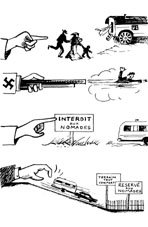
Residents of Norwich-based sheltered housing schemes will have more comfort in their own homes when nine new No Cold Calling Zones were launched by Norfolk County Council Trading Standards on Tuesday January 22.
The zones take the total number of zones in the county to fourteen - and will be located at Fellowes Close, Custance Court, Silkfields, Meadowsweet, Ryrie Court, Millers Lane, Stone Road, Alfred Nichols Court and Seabrook Court.
Signs have been erected in these locations, to warn potential uninvited door-to-door callers that they are not welcome - with residents given information for their homes to help them to fully deal with any caller who ignores the warnings.
The County Council's Head of Trading Standards, David Collinson, will be launching all the schemes at 11.30am at Fellowes Close, Earlham - meeting residents and representatives of the various housing schemes.
David Collinson, Head of Norfolk County Council Trading Standards, said: "Research done with over 9000 consumers by the Trading Standards Institute showed that 96% of respondents do not want cold calling - something which is often used as a smokescreen for con men and criminals who prey on vulnerable households - particularly older people.
"No Cold Calling Zones support residents' ability and confidence to say no to unwanted cold callers and have been proven to reduce crime and ultimately provide an increased feeling of security for residents.
"The zones also provide Trading Standards with valuable information about traders operating in the area, which aids effective enforcement against doorstop crime."
In order for Trading Standards to support a location to become a No Cold Calling Zone, it has to meet a number of criteria.
These include the history of cold calling there, the number of incidents reported to Trading Standards and the Police, the residents' vulnerability, and the support of the local city, town or parish council all taken into consideration.
So, Fohki, you have been told. Don't get lawed, get wise. As I have told you all in the article “No Cold Calling Areas”, you don't go and call at the door; you leaflet. You all have cell phones (mobiles) nowadays, I am sure. And, for o Del's sake, don't sham for a change. Give a proper day's work for a proper day's lova. Don't ask £1,000 for a £100 job. That's how you ruin it for everybody.
Michael Smith (Veshengro), January 2008

Gypsy site
PLANS to build a new gypsy and traveller site in Allerdale have taken a step forward this week.
Allerdale Council’s watchdog, the Community Overview and Scrutiny Committee, has said they are happy with a new strategy to combat prejudice against gypsies who move to the area.
The strategy, which has been drafted to comply with the Race Relations Act, aims to understand and raise awareness of the needs and culture of gypsies and travellers in the area.
It will look at reducing prejudice and enhancing accommodation, education and employment issues.
This is the first step in the process that will continue over the next few years.
About 40 gypsy and traveller camps are set up in Allerdale every year, but this year the number has increased.
Because there are no authorised sites it often results in the need for legal intervention.
All districts in Cumbria are having research carried out to identify the need for named sites.
The results should be ready by the end of February and then the process of identifying potential sites and bidding for Government money will begin.
Kim Suttle, Allerdale’s housing services manager, said at the moment the council has difficulty with gypsies and travellers because they don’t provide any sites where they can go.
Councillor Barbara Cannon said: “I think the strategy itself is fine and is well overdue.”
In April 2006 plans to create a permanent site in Workington or Maryport were put on hold following strong opposition from residents.
Four sites were earmarked in Workington – the former tannery on the A594, land south of Siddick, land at Oldside and a site south of John Pier pumping station.
In Maryport the three potential sites were land south of the harbour, a site at Ellenborough Place and one at the Glasson Industrial Estate.
The strategy will eventually go before full council.
Editorial Comment:
Oh, here we go again... Gypsy site placed on an Industrial Estate, probably like the site at Earlsfield near Wimbledon, London, where it is right next to the cement works. Ever so healthy. If it is not near such a place then it is right next to sewerage plants, refuse tips, and such places. I guess all but those that are entirely blind can see the pattern. The Gypsy, that is us, the Rom, are seen as nothing more than rubbish.
Michael Smith (Veshengro), January 2008
Allerdale Council’s watchdog, the Community Overview and Scrutiny Committee, has said they are happy with a new strategy to combat prejudice against gypsies who move to the area.
The strategy, which has been drafted to comply with the Race Relations Act, aims to understand and raise awareness of the needs and culture of gypsies and travellers in the area.
It will look at reducing prejudice and enhancing accommodation, education and employment issues.
This is the first step in the process that will continue over the next few years.
About 40 gypsy and traveller camps are set up in Allerdale every year, but this year the number has increased.
Because there are no authorised sites it often results in the need for legal intervention.
All districts in Cumbria are having research carried out to identify the need for named sites.
The results should be ready by the end of February and then the process of identifying potential sites and bidding for Government money will begin.
Kim Suttle, Allerdale’s housing services manager, said at the moment the council has difficulty with gypsies and travellers because they don’t provide any sites where they can go.
Councillor Barbara Cannon said: “I think the strategy itself is fine and is well overdue.”
In April 2006 plans to create a permanent site in Workington or Maryport were put on hold following strong opposition from residents.
Four sites were earmarked in Workington – the former tannery on the A594, land south of Siddick, land at Oldside and a site south of John Pier pumping station.
In Maryport the three potential sites were land south of the harbour, a site at Ellenborough Place and one at the Glasson Industrial Estate.
The strategy will eventually go before full council.
Editorial Comment:
Oh, here we go again... Gypsy site placed on an Industrial Estate, probably like the site at Earlsfield near Wimbledon, London, where it is right next to the cement works. Ever so healthy. If it is not near such a place then it is right next to sewerage plants, refuse tips, and such places. I guess all but those that are entirely blind can see the pattern. The Gypsy, that is us, the Rom, are seen as nothing more than rubbish.
Michael Smith (Veshengro), January 2008


Gypsies 'could be forced onto streets'
A group of Romany Gypsies could be forced onto the streets if they are not permitted to live in caravans at their parents' home it was claimed at an appeal hearing yesterday.
The site at Woodview, Leys Lane, Attleborough, belongs to Adam and Abronica Jones who were given permission to build a bungalow on the land.
Some of the couple's adult children are now living in caravans in the grounds with their families, without planning consent. An application to regularise the situation, retain four static caravans, and bring in two more to replace existing touring caravans was rejected by Breckland Council in February last year, and Mrs Jones lodged an appeal.
The site is outside the main settlement area and Viv Bebbington, senior development control officer, said the council accepted Mr and Mrs Jones met the criteria that enables an exception to planning policy, as they had led a travelling lifestyle. "The council's view is that not all the people living on the site fall within the specification of Gypsy. They need to justify the need for the exception to be made," she explained. However, the Jones's daughter Charmaine told the hearing they had travelled across the country and might be away from home for three or four months at a time.
Breckland Council has a shortage of Gypsy and Traveller sites, and resident Gary Hamer, who owns land next to Mr and Mrs Jones, said he was considering developing his property for the purpose. "If this application is successful then my plan, after speaking to my solicitor, is to go to the council to open up the whole woods as a transit site. We have worked out there should be enough to get 75 plots on that site."
Planning inspector Dennis Bradley, who conducted the hearing, expects to announce his decision in about a month.
Editorial Comment:
And where are all the big mouths now, such as Puxon, et al, who are very quick on the ball when it comes to Irish Travellers and when they want them to be seen as “ethnic Gypsies” - God forbid – but when it comes to bona fide Romanichals who are settled in one place proper and who just wish their grownup offspring to remain with them in the same place they can nowhere to be found. Well, neither were they anywhere around when Susie King needed help in Leatherhead. Only good the local Gohjas wanted her and the chavies to atch where they are.
Can we see the pattern now, everyone... a quote from the council man... The council's view is that not all the people living on the site fall within the specification of Gypsy... that means that this authority has decided that if you are a Rom and settled you are NO LONGER an ethnic Gypsy and therefore no longer have recourse to the rights. Dordi!
Michael Smith (Veshengro), January 2008
The site at Woodview, Leys Lane, Attleborough, belongs to Adam and Abronica Jones who were given permission to build a bungalow on the land.
Some of the couple's adult children are now living in caravans in the grounds with their families, without planning consent. An application to regularise the situation, retain four static caravans, and bring in two more to replace existing touring caravans was rejected by Breckland Council in February last year, and Mrs Jones lodged an appeal.
The site is outside the main settlement area and Viv Bebbington, senior development control officer, said the council accepted Mr and Mrs Jones met the criteria that enables an exception to planning policy, as they had led a travelling lifestyle. "The council's view is that not all the people living on the site fall within the specification of Gypsy. They need to justify the need for the exception to be made," she explained. However, the Jones's daughter Charmaine told the hearing they had travelled across the country and might be away from home for three or four months at a time.
Breckland Council has a shortage of Gypsy and Traveller sites, and resident Gary Hamer, who owns land next to Mr and Mrs Jones, said he was considering developing his property for the purpose. "If this application is successful then my plan, after speaking to my solicitor, is to go to the council to open up the whole woods as a transit site. We have worked out there should be enough to get 75 plots on that site."
Planning inspector Dennis Bradley, who conducted the hearing, expects to announce his decision in about a month.
Editorial Comment:
And where are all the big mouths now, such as Puxon, et al, who are very quick on the ball when it comes to Irish Travellers and when they want them to be seen as “ethnic Gypsies” - God forbid – but when it comes to bona fide Romanichals who are settled in one place proper and who just wish their grownup offspring to remain with them in the same place they can nowhere to be found. Well, neither were they anywhere around when Susie King needed help in Leatherhead. Only good the local Gohjas wanted her and the chavies to atch where they are.
Can we see the pattern now, everyone... a quote from the council man... The council's view is that not all the people living on the site fall within the specification of Gypsy... that means that this authority has decided that if you are a Rom and settled you are NO LONGER an ethnic Gypsy and therefore no longer have recourse to the rights. Dordi!
Michael Smith (Veshengro), January 2008
The Road Back – Book Review
The Road Back
A Romany Story
William Lee (author)
Minerva Press 1999
No ISBN
115 pages, paperback, 8”x5.75”
Available only direct from the author
Price: 8 GBP
“The Road Back” is the sequel to “Dark Blood” by the same author and we all know, I am sure, whether with books or with movies, that sequels all too often are nowhere as good as the first one. “The Road Back” is here one of the few exceptions, as it is indeed as good as “Dark Blood” and the story is as fast moving and gripping as the first book.
In “The Road Back” we find Cornelius Lee having escaped from prison and beginning a rather epic journey back to Kent; a journey that will, ultimately, change his life.
Cornelius is still wanting to get even, as he might see it, with Ethan as is set to fight him again for May.
As the same time as Cornelius is on the way back to Kent, Ethan and may are also on a journey, back to Tattlebury, not realizing that they soon will encounter Cornelius again.
There is one extremely hilarious, to me at least, passage in the book, and that is where May is trying to learn to drive the new lorry. I laughed tears reading this as the very description reminded me of my dear blessed Deia learning to drive a motor.
This is all I shall give as a small synopsis of the story in the book as I do not wish to spoil it for the reader.
William Lee is a storyteller par excellence and he may even surpassed himself here.
All I can say is “Thank You, Uncle Bill, for sharing this story with us all and I hope for many more to come”.
And now folks, go and buy the two books. You will not regret it.
To order this book send a cheque of £8 (in the UK) (Overseas please inquire cost and rates for shipping from the author) to:
Romanybooks@aol.co.uk
Review by Michael Smith (Veshengro), January 2008
A Romany Story
William Lee (author)
Minerva Press 1999
No ISBN
115 pages, paperback, 8”x5.75”
Available only direct from the author
Price: 8 GBP
“The Road Back” is the sequel to “Dark Blood” by the same author and we all know, I am sure, whether with books or with movies, that sequels all too often are nowhere as good as the first one. “The Road Back” is here one of the few exceptions, as it is indeed as good as “Dark Blood” and the story is as fast moving and gripping as the first book.
In “The Road Back” we find Cornelius Lee having escaped from prison and beginning a rather epic journey back to Kent; a journey that will, ultimately, change his life.
Cornelius is still wanting to get even, as he might see it, with Ethan as is set to fight him again for May.
As the same time as Cornelius is on the way back to Kent, Ethan and may are also on a journey, back to Tattlebury, not realizing that they soon will encounter Cornelius again.
There is one extremely hilarious, to me at least, passage in the book, and that is where May is trying to learn to drive the new lorry. I laughed tears reading this as the very description reminded me of my dear blessed Deia learning to drive a motor.
This is all I shall give as a small synopsis of the story in the book as I do not wish to spoil it for the reader.
William Lee is a storyteller par excellence and he may even surpassed himself here.
All I can say is “Thank You, Uncle Bill, for sharing this story with us all and I hope for many more to come”.
And now folks, go and buy the two books. You will not regret it.
To order this book send a cheque of £8 (in the UK) (Overseas please inquire cost and rates for shipping from the author) to:
Romanybooks@aol.co.uk
Review by Michael Smith (Veshengro), January 2008
Concern over Traveller sites
MOVES to take decisions on providing Gypsy and and Traveller pitches out of local control are causing concern.
The number of pitches needed in Hertfordshire will total more than 176 by 2011 according to proposals which are due to get the green light next week.
The proposals have caused a stir with county and local councillors, and have been labelled as "rough-shod riding".
On Monday Hertford and Stortford MP Mark Prisk challenged the government to "make a statement on the provision of sites for Travellers and Gypsies in Hertfordshire."
Iain Wright MP, Parliamentary Under-Secretary, Department for Communities and Local Government, said: "The Government recognise the need to address the on-going shortfall in permanent and transit sites for Gypsies and Travellers."
He added: "The East of England regional assembly is preparing an alteration to the regional spatial strategy for the East of England, which we understand is due to be approved by the assembly on January 25.
"This alteration will determine how many pitches will be required for gypsies and travellers in the region. The current draft suggests the need for 1,187 pitches by 2011, 176 of which are in Hertfordshire."
Councillor Peter Ruffles (Conservatives, St Andrews) said: "Pitches in Hertfordshire have been well managed in my experience, for a good many years. My problem comes when people claim that special cases for Gypsy sites over-ride the existing planning policy controls which quite rightly limit the development of homes for others."
He added: "176 sites cannot possibly be introduced into Hertfordshire under these terms, so I oppose the rough-shod riding of the East of England Assembly."
Derrick Ashley, executive member for planning, external relations and waste, criticised planning decisions being taken at a regional level.
He said: "All planning is now in the hands of the regional assembly, what I would describe as a 'semi democratic quango' but this is due to pass into the hands of the East of England Development Agency (EEDA), which is a non-democratic quango.
"The whole move is away from local decision-making.”
Editorial Comment:
The truth is that, it would appear, the Gypsy Site provision must be taken out of the hand of local authorities and ideally placed into the hands of a body that will cover the whole of the country so as to make for evenhanded work. There is, yes, surely, a need for locals to be able to voice their opinion but this cannot and must not be on the grounds of reasons that are normally given such as “the presence of Gypsies makes the value of the houses decrease” and “crime will increase”, and such. That is, when it comes to Gypsies proper, that is to say, the Romani, nothing but racism. It could be said that in the cases of other itinerants the fears often are well founded.
MVS January 2008
The number of pitches needed in Hertfordshire will total more than 176 by 2011 according to proposals which are due to get the green light next week.
The proposals have caused a stir with county and local councillors, and have been labelled as "rough-shod riding".
On Monday Hertford and Stortford MP Mark Prisk challenged the government to "make a statement on the provision of sites for Travellers and Gypsies in Hertfordshire."
Iain Wright MP, Parliamentary Under-Secretary, Department for Communities and Local Government, said: "The Government recognise the need to address the on-going shortfall in permanent and transit sites for Gypsies and Travellers."
He added: "The East of England regional assembly is preparing an alteration to the regional spatial strategy for the East of England, which we understand is due to be approved by the assembly on January 25.
"This alteration will determine how many pitches will be required for gypsies and travellers in the region. The current draft suggests the need for 1,187 pitches by 2011, 176 of which are in Hertfordshire."
Councillor Peter Ruffles (Conservatives, St Andrews) said: "Pitches in Hertfordshire have been well managed in my experience, for a good many years. My problem comes when people claim that special cases for Gypsy sites over-ride the existing planning policy controls which quite rightly limit the development of homes for others."
He added: "176 sites cannot possibly be introduced into Hertfordshire under these terms, so I oppose the rough-shod riding of the East of England Assembly."
Derrick Ashley, executive member for planning, external relations and waste, criticised planning decisions being taken at a regional level.
He said: "All planning is now in the hands of the regional assembly, what I would describe as a 'semi democratic quango' but this is due to pass into the hands of the East of England Development Agency (EEDA), which is a non-democratic quango.
"The whole move is away from local decision-making.”
Editorial Comment:
The truth is that, it would appear, the Gypsy Site provision must be taken out of the hand of local authorities and ideally placed into the hands of a body that will cover the whole of the country so as to make for evenhanded work. There is, yes, surely, a need for locals to be able to voice their opinion but this cannot and must not be on the grounds of reasons that are normally given such as “the presence of Gypsies makes the value of the houses decrease” and “crime will increase”, and such. That is, when it comes to Gypsies proper, that is to say, the Romani, nothing but racism. It could be said that in the cases of other itinerants the fears often are well founded.
MVS January 2008
Grant should address Gypsy and Traveller housing too

The Building & Social Housing Foundation today called on the Government to address the accommodation needs of Gypsies and Travellers in the new Housing and Planning Delivery Grant (HPDG).
The Department for Communities and Local Government (CLG) has been consulting on proposals for the allocation mechanism for the new £510m Grant, but BSHF has responded, noting that it makes no attempt to address the very serious housing needs of Gypsies and Travellers.
According to research highlighted in BSHF’s 2007 report into the housing situation of Gypsies and Travellers, twenty-one per cent of all Gypsies and Travellers living in caravans are legally and practically homeless, having no lawful place to park.
However, less than one square mile of land in the whole of England would be sufficient to provide pitches for all Gypsy and Traveller families who are currently homeless.
The report also found that Gypsies and Travellers experience the worst health and education status of any disadvantaged group in England with 18 per cent of Gypsy and Traveller mothers experiencing the death of a child, compared to one per cent in the settled community.
It also found that Gypsy and Traveller children have significantly lower educational achievements.
Although Gypsies and Travellers are legally recognised as ethnic groups, racist attitudes towards them are still common.
This has been a major factor in the current under-provision of suitable authorised sites and the high number of unauthorised encampments, with all the tensions this can create with neighbouring communities.
Jim Vine, Housing Policy Analyst for BSHF, said: “Last year our report called for urgent increases in the provision of authorised sites for Gypsies and Travellers; the Housing and Planning Delivery Grant is one tool that could help to make that happen.
“The stated aim of the Grant is to incentivise improved housing delivery, including more effective planning, and nowhere is this more needed than housing for Gypsies and Travellers.”
He added: “Under-provision of appropriate authorised sites causes problems for the travelling and settled communities alike.
“If there are insufficient pitches on authorised sites Gypsies and Travellers are forced to resort to unauthorised sites.
“These unauthorised sites are inevitably harder to service, so lead to issues such as waste not being routinely collected.
“Conversely, well-run authorised sites can receive services very similar to ‘bricks and mortar’ homes; rent and council tax can be charged and refuse collection can be regular.”
‘Farming needs a touch of diversity’
MORE ethnic minorities should find their way into the predominantly white and middle class world of farming, according to the country’s best known black farmer.
Wilfred Emmanuel-Jones, who runs the Black Farmer brand, said the country's agricultural industry would benefit greatly if more people from ethnic minorities and urban areas started farms.
The Conservative parliamentary candidate for Chippenham in Wiltshire argued the farming industry needed “new ideas”.
He said: “The big thing the farming community needs is fresh blood.
“The relationship with the consumer has been lost because of the rise of supermarkets over the last 20 years.
People from ethnic communities and urban environments know what food people as a community want and they could produce it.
Change
“Change is essential to bring more interesting ideas into farming.”
Mr Emmanuel-Jones moved to the UK from Jamaica in 1961 when he was just four years old. He was inspired to become a farmer by watching his father tend to his allotment in Birmingham as a child.
He said many ethnic foods are imported to the UK and argued that if farmers were producing it locally they could discover a cash cow.
He added: “People from ethnic minorities should group together and buy their own land.”
It can be seen how many, like Mr. Emanuel-Jones' father, tend allotments and how the entire families decamp to their on the weekends and other times tending their gardens. In many areas of the country there seem to be now more members of ethnic minorities that have allotments than do “whites”.
If one can bring social or ethnic minorities into farming it will help it to cope with all kinds of challenges in the future.
This could also be a good idea for many of the Romani-Gypsy families in the UK (and elsewhere), that is to say to buy farms,especially those in need of lots of TLC (which may not cost that much then). The large clans would do well to do that and in the same way this could combat the apparent government housing policy to break up the “large” Gypsy families, destroying the family structure and with it the Romani Culture.
The faming industry in this country, and not just in this country, is still dominated by a certain clique of white, middle class people. Diversity really benefits all sorts of organisations and businesses, but not really agriculture.
Many of the Romani probably will be reading this and wondering as to whether this writer has lost his marbles and probably think “we are not farmers”. Why not?
The Romani in the UK traditionally worked on farms and many, I am sure, could run farms as well and efficient as the non-Romani.
There are many Rom that are farmers in other EU countries, even in Germany, and many have been for generations. So, what's keeping you?
Getting hold of farms in need of TLC also would enable many of the families to atch together in one place and, with the right attitude to the farming neighbors, I am sure, Rom could be as accepted as others who set up farms.
Michael Smith (Veshengro), January 2008
Wilfred Emmanuel-Jones, who runs the Black Farmer brand, said the country's agricultural industry would benefit greatly if more people from ethnic minorities and urban areas started farms.
The Conservative parliamentary candidate for Chippenham in Wiltshire argued the farming industry needed “new ideas”.
He said: “The big thing the farming community needs is fresh blood.
“The relationship with the consumer has been lost because of the rise of supermarkets over the last 20 years.
People from ethnic communities and urban environments know what food people as a community want and they could produce it.
Change
“Change is essential to bring more interesting ideas into farming.”
Mr Emmanuel-Jones moved to the UK from Jamaica in 1961 when he was just four years old. He was inspired to become a farmer by watching his father tend to his allotment in Birmingham as a child.
He said many ethnic foods are imported to the UK and argued that if farmers were producing it locally they could discover a cash cow.
He added: “People from ethnic minorities should group together and buy their own land.”
It can be seen how many, like Mr. Emanuel-Jones' father, tend allotments and how the entire families decamp to their on the weekends and other times tending their gardens. In many areas of the country there seem to be now more members of ethnic minorities that have allotments than do “whites”.
If one can bring social or ethnic minorities into farming it will help it to cope with all kinds of challenges in the future.
This could also be a good idea for many of the Romani-Gypsy families in the UK (and elsewhere), that is to say to buy farms,especially those in need of lots of TLC (which may not cost that much then). The large clans would do well to do that and in the same way this could combat the apparent government housing policy to break up the “large” Gypsy families, destroying the family structure and with it the Romani Culture.
The faming industry in this country, and not just in this country, is still dominated by a certain clique of white, middle class people. Diversity really benefits all sorts of organisations and businesses, but not really agriculture.
Many of the Romani probably will be reading this and wondering as to whether this writer has lost his marbles and probably think “we are not farmers”. Why not?
The Romani in the UK traditionally worked on farms and many, I am sure, could run farms as well and efficient as the non-Romani.
There are many Rom that are farmers in other EU countries, even in Germany, and many have been for generations. So, what's keeping you?
Getting hold of farms in need of TLC also would enable many of the families to atch together in one place and, with the right attitude to the farming neighbors, I am sure, Rom could be as accepted as others who set up farms.
Michael Smith (Veshengro), January 2008
Dark Blood – Book Review
Dark Blood
A Romany Story
William Lee (author)
Minerva Press 1999
ISBN: 0-75410-703-5
118 pages, paperback, 8”x5.75”
Available only direct from the author
Price: 8 GBP
Dark Blood is the story of Ethan Bray, a Romany boy orphaned in World War II, growing up with Gohja folks. Into his settled farming life in post-war Kent comes May, the daughter of the Romany-Gypsy Tucker Beaney; but Ethan must face great dangers and personal conflict in order to win her hand in marriage.
It took me just a little over a day to read this book from cover to cover, not wanting to put it down.
I have laughed and I have cried, and I have fumed with anger at the injustices done to the characters just for being Romany, while reading this book; emotions aroused by the beautiful telling of this story.
Dark Blood is a fast moving story that will grip the reader nigh from the first page and will not let go till the last word.
This is how a story should be told, the story of the Romany, telling parts of our Culture without disclosing too much.
I can wholeheartedly recommend this book to anyone. You will not be disappointed and Dark Blood is equally suited for adults and young people alike.
Go and buy the book and support a Romany author who has used his own money to self-publish his books through a so-called “vanity publisher” so that all can enjoy those stories. But having done the publishing by means of a “vanity publisher” it was sure no vanity on Kako Bill's part. We must all thank him for having done so.
Yes, I did say books in the last paragraph. There is indeed a sequel out to Dark Blood, thank the Duvel.
To order this book send a cheque of £8 (in the UK) (Overseas please enquire cost and rates for shipping from the author) to:
Romanybooks@aol.co.uk
Review by Michael Smith (Veshengro), January 2008
A Romany Story
William Lee (author)
Minerva Press 1999
ISBN: 0-75410-703-5
118 pages, paperback, 8”x5.75”
Available only direct from the author
Price: 8 GBP
Dark Blood is the story of Ethan Bray, a Romany boy orphaned in World War II, growing up with Gohja folks. Into his settled farming life in post-war Kent comes May, the daughter of the Romany-Gypsy Tucker Beaney; but Ethan must face great dangers and personal conflict in order to win her hand in marriage.
It took me just a little over a day to read this book from cover to cover, not wanting to put it down.
I have laughed and I have cried, and I have fumed with anger at the injustices done to the characters just for being Romany, while reading this book; emotions aroused by the beautiful telling of this story.
Dark Blood is a fast moving story that will grip the reader nigh from the first page and will not let go till the last word.
This is how a story should be told, the story of the Romany, telling parts of our Culture without disclosing too much.
I can wholeheartedly recommend this book to anyone. You will not be disappointed and Dark Blood is equally suited for adults and young people alike.
Go and buy the book and support a Romany author who has used his own money to self-publish his books through a so-called “vanity publisher” so that all can enjoy those stories. But having done the publishing by means of a “vanity publisher” it was sure no vanity on Kako Bill's part. We must all thank him for having done so.
Yes, I did say books in the last paragraph. There is indeed a sequel out to Dark Blood, thank the Duvel.
To order this book send a cheque of £8 (in the UK) (Overseas please enquire cost and rates for shipping from the author) to:
Romanybooks@aol.co.uk
Review by Michael Smith (Veshengro), January 2008
Separate School Buses for Roma Children
Councillors of the City of Rome have been calling for separate school buses for (immigrant) Roma children as, so it is claimed, Roma children used to fight with the Italian children on those buses.
How long would it be before the call would go out to have separate school buses for Italian Sinti and Roma children? And what next? Separate sidewalks for Sinti and Roma and for “normal” Italians?
Regardless of the fact that this did cause an outcry among the people and especially some more senior people in Rome's city government and one particular councillor, who was a member of the Communist Party in fact, has now resigned and left his post, Italy most certainly is and will be in the future one EU country to watch and closely monitor in regards to Anti-Gypsyism.
We all must keep a rather close eye on the EU per se for this is but the tip of the iceberg, of that I am sure, and it would definitely appear as if move are afoot in many, if not indeed most, EU member states against the Rom. (I use the term Rom here as an all inclusive term to encompass the Sinti, Roma, Kale and indeed other Romani groups).
Vigilance must me maintained and the world must be made aware of any such racist Anti-Gypsy actions and even the mere proposals wherever and whenever they may raise their ugly heads.
© Michael Smith (Veshengro), January 2008
How long would it be before the call would go out to have separate school buses for Italian Sinti and Roma children? And what next? Separate sidewalks for Sinti and Roma and for “normal” Italians?
Regardless of the fact that this did cause an outcry among the people and especially some more senior people in Rome's city government and one particular councillor, who was a member of the Communist Party in fact, has now resigned and left his post, Italy most certainly is and will be in the future one EU country to watch and closely monitor in regards to Anti-Gypsyism.
We all must keep a rather close eye on the EU per se for this is but the tip of the iceberg, of that I am sure, and it would definitely appear as if move are afoot in many, if not indeed most, EU member states against the Rom. (I use the term Rom here as an all inclusive term to encompass the Sinti, Roma, Kale and indeed other Romani groups).
Vigilance must me maintained and the world must be made aware of any such racist Anti-Gypsy actions and even the mere proposals wherever and whenever they may raise their ugly heads.
© Michael Smith (Veshengro), January 2008
Fortuneteller gets 1 1/2 years in jail
She bilked brokenhearted woman out of $220,000
By TRACY JOHNSON
P-I REPORTER
The 26-year-old woman was so heartbroken over a breakup with her boyfriend that she trusted two Seattle fortunetellers to help her win him back.
Sophie Evon and her daughter-in-law, both self-proclaimed Gypsies, lit candles, burned leaves and convinced the woman that they could break the spell that had supposedly been cast on her ex.
They just needed to borrow her savings so that they could pray over it.
"Through the whole thing, I always had doubts," the woman told a King County judge on Friday. "I thought (Evon) cared about me. ... She was good at sensing my doubts and re-establishing my trust throughout the whole process."
Read on...
Editorial Comment:
With these kind of folks guaranteeing continuous unfavorable and even bad publicity as regards the Romani-Gypsy, and yes, the Evon and Lee families are Romani, and this is also the case here more than likely, we certainly do not need to look for enemies.
We, the Romani People and Nation, must begin to clean up our own act by policing our own. While fortune telling is fine, in my book, scamming and fraud is not.
MVS
By TRACY JOHNSON
P-I REPORTER
The 26-year-old woman was so heartbroken over a breakup with her boyfriend that she trusted two Seattle fortunetellers to help her win him back.
Sophie Evon and her daughter-in-law, both self-proclaimed Gypsies, lit candles, burned leaves and convinced the woman that they could break the spell that had supposedly been cast on her ex.
They just needed to borrow her savings so that they could pray over it.
"Through the whole thing, I always had doubts," the woman told a King County judge on Friday. "I thought (Evon) cared about me. ... She was good at sensing my doubts and re-establishing my trust throughout the whole process."
Read on...
Editorial Comment:
With these kind of folks guaranteeing continuous unfavorable and even bad publicity as regards the Romani-Gypsy, and yes, the Evon and Lee families are Romani, and this is also the case here more than likely, we certainly do not need to look for enemies.
We, the Romani People and Nation, must begin to clean up our own act by policing our own. While fortune telling is fine, in my book, scamming and fraud is not.
MVS
Clear & Present Danger
“These are the times that try men's souls. The summer soldier and the sunshine patriot will, in this crisis, shrink from the service to their country(*); but he that stands it now, deserves the love and thanks of man and woman. Tyranny, like hell, is not easily conquered; yet we have this consolation with us, that the harder the conflict, the more glorious the triumph.” – Thomas Paine, The American Crisis, 1780
(*) For country it would do us well to substitute “Nation” or “People” as we are here referring to the Romani People or – Nation.
We too live in trying times and so far our soldiers are missing or very few and far between, like partisans rather than an army.
While our enemies plot and scheme, our People remain unready and even unwilling to fight – hiding seems the preferred option – and many, if not indeed most, of our “leaders” - now there is a joke, “leaders” - are worse even than the enemies “outside the gates”. Our People are under grave threat, physical and otherwise, to be wiped out as a People, as a Race, and what do those so-called “leaders” do? Nothing. Nothing to help, that is for sure.
If they are not simply interested in lording it over the “ordinary” grassroots Rom they are after money from the very enemies who, at this very moment, are, once again, plotting to put Rom into concentration camps (Italy – under the guise of “solidarity villages) and ghettos (Czech Republic, etc.), with all those being European Union member countries. The money from the EU is the very reason they are so silent and permit all mention of this to be spiked by the editors of the media in the countries of the new Europe. The European Union is talking big as to what they want to do for the Romani and about integration for our People while behind the scenes something entirely different is going on and they prepare, once again, to incarcerate our Race in camps with barbed wire surrounds and in ghettos with high walls topped with razor wire. Rome burns while Nero fiddles.
Awake Romale – your very leaders, your “kings”, “emperors”, “tsars” and “judges”, the latter who would not be able to judge a beauty contest or an allotment garden produce show, are selling you out to the enemy while feathering their own nests with money that should be for the People.
© Michael Smith (Veshengro), January 2008
This is the first page of an 8-page essay. The essay in its entirety is found in the next issue of the O NEVO DROM Journal. To read this essay complete and other articles, please take out a subscription to the O NEVO DROM journal. Subscription is free and the magazine is paper-less and mailed out as an email attachment. To subscribe send an email to churimengro1-at-yahoo-cot-com with “I wish to subscribe to O NEVO DROM” in the subject line.
(*) For country it would do us well to substitute “Nation” or “People” as we are here referring to the Romani People or – Nation.
We too live in trying times and so far our soldiers are missing or very few and far between, like partisans rather than an army.
While our enemies plot and scheme, our People remain unready and even unwilling to fight – hiding seems the preferred option – and many, if not indeed most, of our “leaders” - now there is a joke, “leaders” - are worse even than the enemies “outside the gates”. Our People are under grave threat, physical and otherwise, to be wiped out as a People, as a Race, and what do those so-called “leaders” do? Nothing. Nothing to help, that is for sure.
If they are not simply interested in lording it over the “ordinary” grassroots Rom they are after money from the very enemies who, at this very moment, are, once again, plotting to put Rom into concentration camps (Italy – under the guise of “solidarity villages) and ghettos (Czech Republic, etc.), with all those being European Union member countries. The money from the EU is the very reason they are so silent and permit all mention of this to be spiked by the editors of the media in the countries of the new Europe. The European Union is talking big as to what they want to do for the Romani and about integration for our People while behind the scenes something entirely different is going on and they prepare, once again, to incarcerate our Race in camps with barbed wire surrounds and in ghettos with high walls topped with razor wire. Rome burns while Nero fiddles.
Awake Romale – your very leaders, your “kings”, “emperors”, “tsars” and “judges”, the latter who would not be able to judge a beauty contest or an allotment garden produce show, are selling you out to the enemy while feathering their own nests with money that should be for the People.
© Michael Smith (Veshengro), January 2008
This is the first page of an 8-page essay. The essay in its entirety is found in the next issue of the O NEVO DROM Journal. To read this essay complete and other articles, please take out a subscription to the O NEVO DROM journal. Subscription is free and the magazine is paper-less and mailed out as an email attachment. To subscribe send an email to churimengro1-at-yahoo-cot-com with “I wish to subscribe to O NEVO DROM” in the subject line.
Happy New Year 2008 to you all
Happy New Year 2008
I would like to take this opportunity to wish all our readers, friends and associates, as well as our enemies, a very happy & prosperous New Year 2008.
I would like to take this opportunity to wish all our readers, friends and associates, as well as our enemies, a very happy & prosperous New Year 2008.
Tom Odley – 1929 – 2007 – Obituary by Romano Yekhipe France
Our Tom is gone and we, from Romano Yekhipe France are very sad. We wish to be joined in the international tribute paid to him. He always offered us a brotherly support in our fights. With Vania de Gila-Kochanowski, we often talked to visit him in his Chattam's home. Unfortunately, we couldn't carried it out for various reasons. But with Tom's consent, we translated in french language some of his brilliant poems that we presented next to Leksa Manush's ones. We knew that some in his country had disapproved the ways he had sometimes followed, but above all, we in France we will always remember him as a Rom speaking plainly and a great defender of the Romanipe. So we are proud to met him "by the way" and will never forget him.
Jean-Claude Mégret (Balval)
for Romano Yekhipe France Board
Jean-Claude Mégret (Balval)
for Romano Yekhipe France Board
Tom Odley – 1929 – 2007 – Obituary
This is one Obituary that I had hoped I would never have to write, but alas, writing I must it now with deep sadness...

Tom Odley, a tireless fighter for the rights of the Romani People, and recently Press & Media Officer to the Gypsy Union, as well as its Deputy General Secretary; Press & Media Officer to the International Romani Guild and an Elder on the presidium; as well as Deputy Director General of the Romani Institute, passed away on December 9, 2007, having just passed his 78th birthday, after having suffered a heart attack a couple of days prior.
Tom, was born on the Isle Of Sheppey, in Kent, England, during 1929, of ‘Nidi’ (Romanichal) descent. He served close to 12years in the Royal Air Force, as a Physical Training/Parachute Jumping Instructor.
Along with his late Beloved Romni, Rose, Tom helped raised ten children.
During the many years spent ‘Po Drom’ with his Family, and since settling down, following the tragic loss of his much-loved wife, Rose, as a result of a fire in their trailer-home, Tom has struggled for the rights of his People, the Rom.
Having a pleasant singing voice, and being a lover of ‘words’, Tom has employed his talents to promote the Romani Cause.
Angered by “The Gypsy Industry” and its exploitation of his fellow Rom, for personal, academic, and political gain by some within the (so-called) “Support” groups, (both Gohja and Rom), Tom was instrumental in the establishment of The British Rommani Union, and, for many years acted as its General Secretary.
Tom has attended and participated in very many conferences and meetings, throughout Europe, and has been responsible for many communications with British Governmental Departments.
Aware of the truism that; “The pen is mightier than the sword”, Tom has used his poetry in attempts to convey to the Gohja, some of the emotions that rise within the Romani People as a result of their mistreatment within Gohja society.
Tom struggled for the rights of the Romani People right till the last days of his life, basically, having been so-founder and officer of the International Romani Guild, the Gypsy Union and the Romani Institute, and having worked on a number of projects until the day he was taken ill.
Amaro Kako Tom will be sadly missed by us all but I, for one, promise that he shall never be forgotten.
Rest in Peace, Amaro Kako.
Michael Smith (Veshengro), December 2007

Tom Odley, a tireless fighter for the rights of the Romani People, and recently Press & Media Officer to the Gypsy Union, as well as its Deputy General Secretary; Press & Media Officer to the International Romani Guild and an Elder on the presidium; as well as Deputy Director General of the Romani Institute, passed away on December 9, 2007, having just passed his 78th birthday, after having suffered a heart attack a couple of days prior.
Tom, was born on the Isle Of Sheppey, in Kent, England, during 1929, of ‘Nidi’ (Romanichal) descent. He served close to 12years in the Royal Air Force, as a Physical Training/Parachute Jumping Instructor.
Along with his late Beloved Romni, Rose, Tom helped raised ten children.
During the many years spent ‘Po Drom’ with his Family, and since settling down, following the tragic loss of his much-loved wife, Rose, as a result of a fire in their trailer-home, Tom has struggled for the rights of his People, the Rom.
Having a pleasant singing voice, and being a lover of ‘words’, Tom has employed his talents to promote the Romani Cause.
Angered by “The Gypsy Industry” and its exploitation of his fellow Rom, for personal, academic, and political gain by some within the (so-called) “Support” groups, (both Gohja and Rom), Tom was instrumental in the establishment of The British Rommani Union, and, for many years acted as its General Secretary.
Tom has attended and participated in very many conferences and meetings, throughout Europe, and has been responsible for many communications with British Governmental Departments.
Aware of the truism that; “The pen is mightier than the sword”, Tom has used his poetry in attempts to convey to the Gohja, some of the emotions that rise within the Romani People as a result of their mistreatment within Gohja society.
Tom struggled for the rights of the Romani People right till the last days of his life, basically, having been so-founder and officer of the International Romani Guild, the Gypsy Union and the Romani Institute, and having worked on a number of projects until the day he was taken ill.
Amaro Kako Tom will be sadly missed by us all but I, for one, promise that he shall never be forgotten.
Rest in Peace, Amaro Kako.
Michael Smith (Veshengro), December 2007
American TV Station calls Gypsies Travelling Con-Artists
In a broadcast, and post on their website, entitled “Fraud Alert: Rip Off Pavers In Your Neighborhood” of Thursday, December 6, 2007, the American TV Station WCIV-TV of Mount Pleasant, SC, declared that people should beware of Gypsy pavers. “They are called gypsies because they are a traveling group of con-artists”, writes Katie Newingham of WCIV-TV.
In one single sentence this “journalist” and her TV station have villified an entire ethnic People, namely the Rom, regardless of whether any or none of those pavers the warning was issued about are Romani or not, and have once again in the eyes of the general public made us, the Rom, out to be thieves, fraudsters and con-artists.
The Romani Institute, in a protest letter sent to the station, addressed to its president and chief executive, has demanded a public apology, and requested this to be made on their station and network, as well as in the general media in the USA and Europe. In addition the Romani Institute has demanded that any such statement be emailed to the Romani Institute so that it can be published on the media sites operated on behalf of the Romani Institute.
We shall see what happens though I must say that I certainly am not holding my breath, knowing the attitude that the US media and especially the gutter press and gutter TV has towards the Gypsy People and even the law enforcement community insists on calling Gypsies names.
Here is also the address of the TV Station just in case one or the other reader would like to make his or her feelings known to the president and CEO as well.
WCIV-TV
888 Allbritton Blvd.
Mount Pleasant, SC 29464
Anyone wishing for a copy of the original post, which is, so I believe, a transcript of the station's output, can receive a PDF of this by email upon request – the same too as regards to a copy of the protest letter by the Romani Institute to the TV Station.
© Michael Smith (Veshengro), December 2007
In one single sentence this “journalist” and her TV station have villified an entire ethnic People, namely the Rom, regardless of whether any or none of those pavers the warning was issued about are Romani or not, and have once again in the eyes of the general public made us, the Rom, out to be thieves, fraudsters and con-artists.
The Romani Institute, in a protest letter sent to the station, addressed to its president and chief executive, has demanded a public apology, and requested this to be made on their station and network, as well as in the general media in the USA and Europe. In addition the Romani Institute has demanded that any such statement be emailed to the Romani Institute so that it can be published on the media sites operated on behalf of the Romani Institute.
We shall see what happens though I must say that I certainly am not holding my breath, knowing the attitude that the US media and especially the gutter press and gutter TV has towards the Gypsy People and even the law enforcement community insists on calling Gypsies names.
Here is also the address of the TV Station just in case one or the other reader would like to make his or her feelings known to the president and CEO as well.
WCIV-TV
888 Allbritton Blvd.
Mount Pleasant, SC 29464
Anyone wishing for a copy of the original post, which is, so I believe, a transcript of the station's output, can receive a PDF of this by email upon request – the same too as regards to a copy of the protest letter by the Romani Institute to the TV Station.
© Michael Smith (Veshengro), December 2007
O Nevo Drom & Romani First racist?
There are many out there, I am aware of that, who accuse O Nevo Drom and, certainly, I know that for a fact, Romani First - and we have just seen that in a comment on the Romani First Blog - of being racist because we put the Romani People first and foremost, and we say by Romani for Romani, and exempting non-Romani Travellers, such as the Irish Travellers.
Let me state categorically that we do so unashamedly, e.g. putting our Romani People first and foremost, above all others, and this has nothing whatsoever to do with racism. It has, however, everything to do with Pride in our Race. While other races do exactly that, namely excluding others that are NOT of their ethnicity, why are we, the Romani, being accused of racism every time when we attempt to do the same, be that in organizations or in publications? We are Romani and work for Romani and our concern is ONLY for the Romani People.
The Irish Travellers have enough Gohja running around in circles helping them and even some of the Romani groups too who think that that will benefit them, the Romani, if they do. Nothing could be further from the truth. We must adhere to the old adage “Rom Romensa Gadje Gadjensa”, and it is in that spirit that we maintain O Nevo Drom and especially Romani First, magazine and foundation.
I do know that there are some Travellers that are mixed Romani Blood with Irish Traveller or other Traveller blood and it is obvious that those are torn in their loyalty and therefore try to have a foot in both camps, even trying, which just cannot be, to unite Romani and Irish in fighting for the same rights. The Irish and the Romani, I am sorry, are different and as I do have said before when people ask me what the difference is between Gypsy and Traveller, in that “not all Gypsy are Traveller and not all Traveller are Gypsy”. This is something, it would appear that also the general media and many authorities do not seem to understand.
The term Gypsy rightfully belongs to the Romani and to the Romani only and while some Romani, some Gypsy, may still be Travellers, in that they may travel from time to time, Travellers, whether they travel or not are NOT Gypsy, as they are, in the main, not Romani.
But I am aware that this is all very difficult to understand for those politicos in the “Gypsy Industry” who are hellbent to make the Irish Travellers into Gypsy, for instance, and like the European bodies that insist in now calling the (Irish) Travellers the term “Roma”. Dordi! Firstly not even all Romani are Roma and should therefore not be called thus but to add other groups of non-Romani itinerants, such as the Irish Travellers, and others, into the term “Roma”, really tops it.
Another reason why Romani First exists. Namely to educate the rest of the world to the truth as to how things really are as regards the Gypsy, the Romani, and other groups.
The European bodies too need to be educated in that for they now have included the Irish Travellers in the term “Roma”.
I sometimes wonder whether we are fighting a losing battle here and those people have such a well hidden agenda that it is not a case that they do not understand but a case that they do not want to accept this simple because it does not fit their design.
This is becoming visible in Britain now, in many counties, where the local powers that be have decided that only those that travel, regardless whether they are Romani or not, are ethnic Gypsies, and any Romani that have moved permanently onto sites or into houses are, because they have become sedentary, are no longer ethnic Gypsy. So, according to their wisdom (what wisdom, I know...), when is a Gypsy not a Gypsy... when he has become settled. The “funny” part is though that the travelling with trailer permanently is no longer possible due to all the nice laws against Gypsies in Britain. So,, how do you save an ethnic problem. Declare that only Gypsies that travel are ethnic Gypsies, then outlaw the travelling lifestyle and force them into houses, and, voila, no more ethnic Gypsies.
It should therefore by now becoming blatantly obvious to any but the blind what the European institutions are up to with the issue of making everyone “Roma”. We soon will solve that ethnic problem too in Europe. In Germany now the term “members of a mobile ethnic minority” is being used in legalese for “Sinti and Roma”. But what if those members are not mobile, e.g. they live permanently in a house?
© Michael Smith (Veshengro), December 2007
Let me state categorically that we do so unashamedly, e.g. putting our Romani People first and foremost, above all others, and this has nothing whatsoever to do with racism. It has, however, everything to do with Pride in our Race. While other races do exactly that, namely excluding others that are NOT of their ethnicity, why are we, the Romani, being accused of racism every time when we attempt to do the same, be that in organizations or in publications? We are Romani and work for Romani and our concern is ONLY for the Romani People.
The Irish Travellers have enough Gohja running around in circles helping them and even some of the Romani groups too who think that that will benefit them, the Romani, if they do. Nothing could be further from the truth. We must adhere to the old adage “Rom Romensa Gadje Gadjensa”, and it is in that spirit that we maintain O Nevo Drom and especially Romani First, magazine and foundation.
I do know that there are some Travellers that are mixed Romani Blood with Irish Traveller or other Traveller blood and it is obvious that those are torn in their loyalty and therefore try to have a foot in both camps, even trying, which just cannot be, to unite Romani and Irish in fighting for the same rights. The Irish and the Romani, I am sorry, are different and as I do have said before when people ask me what the difference is between Gypsy and Traveller, in that “not all Gypsy are Traveller and not all Traveller are Gypsy”. This is something, it would appear that also the general media and many authorities do not seem to understand.
The term Gypsy rightfully belongs to the Romani and to the Romani only and while some Romani, some Gypsy, may still be Travellers, in that they may travel from time to time, Travellers, whether they travel or not are NOT Gypsy, as they are, in the main, not Romani.
But I am aware that this is all very difficult to understand for those politicos in the “Gypsy Industry” who are hellbent to make the Irish Travellers into Gypsy, for instance, and like the European bodies that insist in now calling the (Irish) Travellers the term “Roma”. Dordi! Firstly not even all Romani are Roma and should therefore not be called thus but to add other groups of non-Romani itinerants, such as the Irish Travellers, and others, into the term “Roma”, really tops it.
Another reason why Romani First exists. Namely to educate the rest of the world to the truth as to how things really are as regards the Gypsy, the Romani, and other groups.
The European bodies too need to be educated in that for they now have included the Irish Travellers in the term “Roma”.
I sometimes wonder whether we are fighting a losing battle here and those people have such a well hidden agenda that it is not a case that they do not understand but a case that they do not want to accept this simple because it does not fit their design.
This is becoming visible in Britain now, in many counties, where the local powers that be have decided that only those that travel, regardless whether they are Romani or not, are ethnic Gypsies, and any Romani that have moved permanently onto sites or into houses are, because they have become sedentary, are no longer ethnic Gypsy. So, according to their wisdom (what wisdom, I know...), when is a Gypsy not a Gypsy... when he has become settled. The “funny” part is though that the travelling with trailer permanently is no longer possible due to all the nice laws against Gypsies in Britain. So,, how do you save an ethnic problem. Declare that only Gypsies that travel are ethnic Gypsies, then outlaw the travelling lifestyle and force them into houses, and, voila, no more ethnic Gypsies.
It should therefore by now becoming blatantly obvious to any but the blind what the European institutions are up to with the issue of making everyone “Roma”. We soon will solve that ethnic problem too in Europe. In Germany now the term “members of a mobile ethnic minority” is being used in legalese for “Sinti and Roma”. But what if those members are not mobile, e.g. they live permanently in a house?
© Michael Smith (Veshengro), December 2007
Little Money Street: In Search of Gypsies and Their Music in the South of France – Book Review

Fernanda Eberstadt
256 pages Hardcover
Published by Alfred A. Knopf, Publishers, New York
Published: March 14, 2006
ISBN-10: 0375-41116-X
From the author of four novels comes this remarkable book, both impassioned and humorous, about the Gypsies of southwestern France - their habits, their haunts, and their haunting music.
In 1998, Fernanda Eberstadt, her husband, and their two small children moved from New York to an area outside Perpignan, a city set on a series of bluffs overlooking the river Tet, with one of the largest, if not the largest, Gypsy populations in Western Europe. Always fascinated with Gypsy music, Eberstadt became obsessed with the local “Gypsy rumba,” and with a Perpignan band called Tekameli, perhaps the greatest Gypsy band between Barcelona and Budapest. After eighteen futile months of trying to make contact, she was at last invited into the home of Tekameli’s lead singer, Moïse Espinas, and into the closed world of the Gypsies.
Here she found a jealously guarded culture - a society made, in part, of lawlessness and defiance of non-Gypsy norms - that nonetheless made room for her, “a privileged American in a Mediterranean 'underworld'.” As her relationship with the Espinas family changed over the years from mutual bafflement to a deep-rooted friendship, the author found herself a part of Gypsy life, moving about in a large group whose core included Moïse, his wife, her sister, and their children - at cockfights, in storefront churches, at malls, in their homes, and at their rehearsals, discovering lives lived “between biblical laws and strip-mall consumerism” - and always accompanied by the intense and infectious beat of their heart-stopping music.
Little Money Street is a spellbinding story of the Gypsies and the little-known landscape in France they have called home for centuries, and of one woman’s extraordinary journey among them.
Fernanda Eberstadt, who is a critically acclaimed novelist, proves herself a master of nonfiction as well with this book.
What began as an attempt to document the fortunes of a successful Gypsy rumba band quickly turned into something much broader for the author, as we can see.
Little Money Street tells it like it is in the life of the Romani in the Perpignan area of France, warts – and there are lots of them – and all.
It also, even to a Rom myself, showed things in our People that I had not even noticed proper though of which I am personally aware, such as the constant fear that one may have upset someone, especially a friend. I have always thought that to be a particular trait of mine only, a hang-up of some sort, but, apparently, this seems to be something in the genes of all of ours.
This book is very much in the vein of “Proud Outcasts: The Gypsies of Spain” by Merrill F. McLane, about the Cale (Gitanos) of the Quadix region of Spain.
One of the biggest problems that the Gypsies of Perpignan have, and the confusions that are bound up with that, is caused by the fact that they have all, in the main, fallen into the trap of pentecostalist Protestantism.
This book is hilarious to the extreme at times when one reads how the Gypsies, men and women, and children, act and react, and the author has such a lovely warm way of telling it. Knowing our Culture and Behavior I can, obviously, fell with it when it is seen from an outsider, and sometimes even cringe when reading as to the amount of information that is in there about our People. No, not by way of Culture and Traditions and such that should not be seen by outsiders but just in general.
I can but highly recommend this book to anyone, not just those interested in Gypsy music and the band “Tekameli”. Be, however, prepared to laugh and cry, often at the same time, when reading this book.
Review by Michael Smith (Veshengro), December 2007
N.B. This book was NOT supplied by the publishers, even though I had wanted to contact them for a long time to get a copy, but was purchased – for very little – at a local Charity Shop.
After the Mourning - Book review

BARBARA NADEL
352 pages - Paperback
Published by Headline Publishing Group, 2006
ISBN-10: 0 7553 2138 3
ISBN-13: 978 0 7553 2138 4
After the Mourning is Barbara Nadel’s second novel set during the Blitz in 1940’s London and again features undertaker and rather unlikely amateur sleuth Francis Hancock, but an amateur sleuth he, nevertheless, is, and a rather good one in my view.
This time, Hancock gets a call to go out to Epping Forest to see to the body of a Gypsy girl, Lily Lee, who has been savagely murdered.
The story then jumps back to the uproar that Lily had caused when she was alive because many believed that she had had a vision of the Virgin Mary. In a time of war any glimmer of hope is a magnet and Lily is transformed into an overnight sensation, bringing hundreds of people from the city to the forest.
We will find out in due course, though, that it was something entirely different that she saw and that she conversed with.
All the extra people thwart the military police’s efforts to find, not only the run-of-the-mill deserters, but fugitives too. One in particular, who they believe is being hidden by the Gypsies, and who is a Sinto from Germany.
Hancock, meanwhile, becomes involved because of the respect and trust the Gypsies have for him. As the story progresses, however, it becomes clear that who’s who and what’s what is about as easy to work out as where the next flying bomb’s going to hit.
The author's main character, Francis Hancock, is a charming, flawed individual with a powerfully developed sense of right and wrong and abiding empathy.
This is crime solving before forensics was a science, and Nadel also admirably captures the time, both descriptively and in terms of mindset. The novel is not only a whodunit, but also an insight into the history of the Gypsies and the persecution they suffered under the Nazis, though I am not entirely convinced that this fact would actually have been too well known amongst the Rom in Britain at that time.
Then again it is being said that the English Rom that bought up all those houses in Abbey Wood just around the time before World War II did so because they were supposed to have gotten wind of what would happen to them were they found as travelling Gypsies should Hitler have managed to invade those sceptered Isles.
If you like thrillers and fancy something a little less contemporary then try “After the Mourning.” I can highly recommend it. Beware though that it is a page turner and you may not want to put that book down again till you have finished it.
Michael Smith (Veshengro), December 2007
N.B. This book was NOT supplied by the publishers – I had not even known of its existence - but by a visitor to the Park where I work, who is a former Borough Councillor.
New drive to improve Gypsy and Traveller site provision
More funding for Gypsy and Traveller housing
Communities Minister Iain Wright announced on Tuesday, December 11, 2007 a further £97 million in Government funding to help local councils meet the housing needs of Gypsy and Traveller families in their area. The funding is part of a package of new measures aimed at cutting the number of unauthorised sites in inappropriate locations, such as car parks or lay-bys.
The Gypsy and Traveller site grants will be available for councils to deliver new and refurbished sites for Gypsies and Travellers in their areas. The grants cover 100 per cent of the cost of local council schemes that provide additional pitches through new sites, extensions to existing sites, or bring pitches back into use.
By increasing the supply of authorised sites, the Government aims to improve the current levels of unauthorised encampment and development, which are a result of nearly a quarter of Gypsies and Travellers living in caravans having no authorised place to stay.
This renewed commitment to tackle the problem of unauthorised sites follows publication of a Government-commissioned report from the Task Group on Site Provision and Enforcement. The group's report concludes that Government policy on site provision and enforcement is sound, and calls for a consensus around the need for authorised Gypsy and Traveller sites.
Other measures being taken forward following the report's recommendations include:
* New Government guidance for councils on tackling anti-social behaviour - the guidance will support local authorities and the police in dealing with anti-social behaviour where Gypsies and Travellers are either the victims or perpetrators;
* A Gypsy and Traveller 'summit' - Ministers will meet with Gypsy and Traveller representatives to discuss their concerns about the different definitions used for Gypsies and Travellers for housing and planning purposes;
* Improved monitoring - the Government will report annually to Parliament on progress on Gypsy and Traveller issues.
Iain Wright said:
"We are increasing council funding to ensure that local authorities can thoroughly assess and meet the accommodation needs of Gypsies and Travellers, as required by legislation.
"This funding will help councils deliver more and better sites for Gypsies and Travellers, reducing the £18 million annual enforcement bill, and helping improve the health and education prospects of one of the most socially excluded groups in the country.
"It is important that councils ensure there are enough authorised sites for travelling communities. A good supply of legal sites can break the vicious circle of evictions that is costly in terms of both local tensions and taxpayers' cash."
Commenting on publication of the Task Group on Site Provision and Enforcement report, he continued:
"It's pleasing to see that the task group finds that our policies on site provision and enforcement are sound, but we recognise there needs to be further progress.
"We are determined to do our bit to help local government provide the extra pitches needed and will work to remove the problem of unauthorised encampments.
"Today we are announcing our intention to publish new guidance for councils on tackling anti-social behaviour and I will also be meeting with representatives from the travelling community to discuss their concerns."
Sir Brian Briscoe, chair of the Task Group on Site Provision and Enforcement, said:
"The evidence that the Task Group has collected demonstrates that policy on site provision and enforcement is broadly right. But the challenge, to Government and local Councils, is to get sites on the ground to meet the need for 4000 pitches, so that Gypsies and Travellers can have secure homes and that the £18m spent each year on enforcement is put to better use. This will require resources and political will, but it is a task that can be done.
Our Report is not the end of the matter and we think it is crucial that Government, with the organisations represented on the Task Group and the Gypsy and Traveller community, regularly monitors progress, to ensure that there is no slackening of the pace in securing better lives for the children and young people of this small but important ethnic minority."
Between 2006-08, Communities and Local Government have made £56 million available in site grants, which are on course to deliver at least 450 additional pitches and 128 refurbished sites across the country.
Editorial Comment:
This will really please the settled, the Gohja, community no end, this investment in council site provision while, at the same time, when Gypsies (and Travellers) want to make their own provisions such applications are, in the great majority of cases, rejected, also at great expense to the tax payer. The locals that always complain about illegal encamped Gypsies (or Travellers) do not seem to realize that (1) some of them are there, illegally encamped as a direct result of some other locals objecting to them setting up a little site somewhere in a way out (often) place on a bit of farm land and (2) that this all costs them their money.
The Gypsy and Traveller 'summit', spoken about by the Minister, will really benefit the Gypsy (and Traveller) – NOT – for the so-called representatives are all those that have their own political axes to grind. Nor can anyone believe that the minister and the government would take notice of the grassroots Romani-Gypsy (and Travellers) anyway. Therefore the political activists, the majority of which, in this country, are NOT Romani but are wannabes, and the non-Gypsy academics will, once again, tell the government what the Gypsy (and Traveller) communities (yes, plural, for it is not ONE community) need, the way they see it.
The Gypsies in the UK need the right to make their own provisions. Many who are willing to do so – and many they are – are being stopped again and again by the authorities (see “UK Gypsy Site Policy & Implementation by Local Authorities”) with the authorities then taking over the Gypsy-provided sites, after evicting the legal owners, declaring them then council sites, and renting the plots back to the people.
The minister tried to appear to be concerned for better lives for the children and young people of this small but important ethnic minority but I would suggest that we do not buy into this too deeply. For suddenly we are a “small but important ethnic minority”. Amazingly no one wants to know when our People want to make their own provisions but in this case... Beware of strangers bearing gifts...
Also we are NOT a small minority if we could get all those out of the woodwork that are of Romani-Gypsy origin and who know this. While the official estimate is some thousands of Romanichal in Britain, if we would but look then we could probably make that about a few hundreds of thousands. We are not such a small minority.
Comments by M V Smith, Editor
Communities Minister Iain Wright announced on Tuesday, December 11, 2007 a further £97 million in Government funding to help local councils meet the housing needs of Gypsy and Traveller families in their area. The funding is part of a package of new measures aimed at cutting the number of unauthorised sites in inappropriate locations, such as car parks or lay-bys.
The Gypsy and Traveller site grants will be available for councils to deliver new and refurbished sites for Gypsies and Travellers in their areas. The grants cover 100 per cent of the cost of local council schemes that provide additional pitches through new sites, extensions to existing sites, or bring pitches back into use.
By increasing the supply of authorised sites, the Government aims to improve the current levels of unauthorised encampment and development, which are a result of nearly a quarter of Gypsies and Travellers living in caravans having no authorised place to stay.
This renewed commitment to tackle the problem of unauthorised sites follows publication of a Government-commissioned report from the Task Group on Site Provision and Enforcement. The group's report concludes that Government policy on site provision and enforcement is sound, and calls for a consensus around the need for authorised Gypsy and Traveller sites.
Other measures being taken forward following the report's recommendations include:
* New Government guidance for councils on tackling anti-social behaviour - the guidance will support local authorities and the police in dealing with anti-social behaviour where Gypsies and Travellers are either the victims or perpetrators;
* A Gypsy and Traveller 'summit' - Ministers will meet with Gypsy and Traveller representatives to discuss their concerns about the different definitions used for Gypsies and Travellers for housing and planning purposes;
* Improved monitoring - the Government will report annually to Parliament on progress on Gypsy and Traveller issues.
Iain Wright said:
"We are increasing council funding to ensure that local authorities can thoroughly assess and meet the accommodation needs of Gypsies and Travellers, as required by legislation.
"This funding will help councils deliver more and better sites for Gypsies and Travellers, reducing the £18 million annual enforcement bill, and helping improve the health and education prospects of one of the most socially excluded groups in the country.
"It is important that councils ensure there are enough authorised sites for travelling communities. A good supply of legal sites can break the vicious circle of evictions that is costly in terms of both local tensions and taxpayers' cash."
Commenting on publication of the Task Group on Site Provision and Enforcement report, he continued:
"It's pleasing to see that the task group finds that our policies on site provision and enforcement are sound, but we recognise there needs to be further progress.
"We are determined to do our bit to help local government provide the extra pitches needed and will work to remove the problem of unauthorised encampments.
"Today we are announcing our intention to publish new guidance for councils on tackling anti-social behaviour and I will also be meeting with representatives from the travelling community to discuss their concerns."
Sir Brian Briscoe, chair of the Task Group on Site Provision and Enforcement, said:
"The evidence that the Task Group has collected demonstrates that policy on site provision and enforcement is broadly right. But the challenge, to Government and local Councils, is to get sites on the ground to meet the need for 4000 pitches, so that Gypsies and Travellers can have secure homes and that the £18m spent each year on enforcement is put to better use. This will require resources and political will, but it is a task that can be done.
Our Report is not the end of the matter and we think it is crucial that Government, with the organisations represented on the Task Group and the Gypsy and Traveller community, regularly monitors progress, to ensure that there is no slackening of the pace in securing better lives for the children and young people of this small but important ethnic minority."
Between 2006-08, Communities and Local Government have made £56 million available in site grants, which are on course to deliver at least 450 additional pitches and 128 refurbished sites across the country.
Editorial Comment:
This will really please the settled, the Gohja, community no end, this investment in council site provision while, at the same time, when Gypsies (and Travellers) want to make their own provisions such applications are, in the great majority of cases, rejected, also at great expense to the tax payer. The locals that always complain about illegal encamped Gypsies (or Travellers) do not seem to realize that (1) some of them are there, illegally encamped as a direct result of some other locals objecting to them setting up a little site somewhere in a way out (often) place on a bit of farm land and (2) that this all costs them their money.
The Gypsy and Traveller 'summit', spoken about by the Minister, will really benefit the Gypsy (and Traveller) – NOT – for the so-called representatives are all those that have their own political axes to grind. Nor can anyone believe that the minister and the government would take notice of the grassroots Romani-Gypsy (and Travellers) anyway. Therefore the political activists, the majority of which, in this country, are NOT Romani but are wannabes, and the non-Gypsy academics will, once again, tell the government what the Gypsy (and Traveller) communities (yes, plural, for it is not ONE community) need, the way they see it.
The Gypsies in the UK need the right to make their own provisions. Many who are willing to do so – and many they are – are being stopped again and again by the authorities (see “UK Gypsy Site Policy & Implementation by Local Authorities”) with the authorities then taking over the Gypsy-provided sites, after evicting the legal owners, declaring them then council sites, and renting the plots back to the people.
The minister tried to appear to be concerned for better lives for the children and young people of this small but important ethnic minority but I would suggest that we do not buy into this too deeply. For suddenly we are a “small but important ethnic minority”. Amazingly no one wants to know when our People want to make their own provisions but in this case... Beware of strangers bearing gifts...
Also we are NOT a small minority if we could get all those out of the woodwork that are of Romani-Gypsy origin and who know this. While the official estimate is some thousands of Romanichal in Britain, if we would but look then we could probably make that about a few hundreds of thousands. We are not such a small minority.
Comments by M V Smith, Editor
The story of Sheep with a message...
Not so long ago and in a pasture too uncomfortably close to here, a flock of sheep lived and grazed. They were protected by a dog, who answered to the master, but despite his best efforts from time to time a nearby pack of wolves would prey upon the flock.
One day a group of sheep, more bold than the rest, met to discuss their dilemma. "Our dog is good, and vigilant, but he is one dog and the wolves are many. The wolves he catches are not always killed, and the master judges and releases many to prey again upon us, for no reason we can understand. What can we do? We are sheep, but we do not wish to be food, too!"
One sheep spoke up, saying "It is his teeth and claws that make the wolf so terrible to us. It is his nature to prey, and he would find any way to do it, but it is the tools he wields that make it possible. If we had such teeth, we could fight back, and stop this savagery." The other sheep clamored in agreement, and they went together to the old bones of the dead wolves heaped in the corner of the pasture, and gathered fang and claw and made them into weapons.
That night, when the wolves came, the newly armed sheep sprang up with their weapons and struck at them and cried "Begone! We are not food!" and drove off the wolves, who were astonished. When did sheep become so bold and so dangerous to wolves? When did sheep grow teeth? It was unthinkable!
The next day, flush with victory and waving their weapons, they approached the flock to pronounce their discovery. But as they drew nigh, the flock huddled together and cried out "Baaaaaaaadddd! Baaaaaddd things! You have bad things! We are afraid! You are not sheep!"
The brave sheep stopped, amazed. "But we are your brethren!" they cried, "We are still sheep, but we do not wish to be food. See, our new teeth and claws protect us and have saved us from slaughter. They do not make us into wolves, they make us equal to the wolves, and safe from their viciousness!"
"Baaaaaaaddd!", cried the flock,"the things are bad and will pervert you, and we fear them. You cannot bring them into the flock. They scare us!". So the armed sheep resolved to conceal their weapons, for although they had no desire to panic the flock, they wished to remain in the fold. But they would not return to those nights of terror, waiting for the wolves to come.
In time, the wolves attacked less often and sought easier prey, for they had no stomach for fighting sheep who possessed tooth and claw even as they did. Not knowing which sheep had fangs and which did not, they came to leave sheep out of their diet almost completely except for the occasional raid, from which more than one wolf did not return. Then came the day when, as the flock grazed beside the stream, one sheep's weapon slipped from the folds of her fleece, and the flock cried out in terror again, "Baaaaaaddddd! You still possess these evil things! We must ban you from our presence!".
And so they did. The great chief sheep and his court and council, encouraged by the words of their moneylenders and advisors, placed signs and totems at the edges of the pasture forbidding the presence of hidden weapons there. The armed sheep protested before the council, saying "It is our pasture, too, and we have never harmed you! When can you say we have caused you hurt? It is the wolves, not we, who prey upon you. We are still sheep, but we are not food!". But the flock would not hear, and drowned them out with cries of "Baaaaaaddd! We will not hear your clever words! You and your things are evil and will harm us!".
Saddened by this rejection, the armed sheep moved off and spent their days on the edges of the flock, trying from time to time to speak with their brethren to convince them of the wisdom of having such teeth, but meeting with little success. They found it hard to talk to those who, upon hearing their words, would roll back their eyes and flee, crying "Baaaaddd! Bad things!".
That night, the wolves happened upon the sheep's totems and signs, and said, "Truly, these sheep are fools! They have told us they have no teeth! Brothers, let us feed!". And they set upon the flock, and horrible was the carnage in the midst of the fold. The dog fought like a demon, and often seemed to be in two places at once, but even he could not halt the slaughter. It was only when the other sheep arrived with their weapons that the wolves fled, vowing to each other to remain on the edge of the pasture and wait for the next time they could prey, for if the sheep were so foolish once, they would be so again. This they did, and do still.
In the morning, the armed sheep spoke to the flock, and said, "See? If the wolves know you have no teeth, they will fall upon you. Why be prey? To be a sheep does not mean to be food for wolves!". But the flock cried out, more feebly for their voices were fewer, though with no less terror, "Baaaaaaaadddd! These things are bad! If they were banished, the wolves would not harm us! Baaaaaaaddd!". The other sheep could only hang their heads and sigh. The flock had forgotten that even they possessed teeth; how else could they graze the grasses of the pasture? It was only those who preyed, like the wolves and jackals, who turned their teeth to evil ends. If you pulled their own fangs those beasts would take another's teeth and claws, perhaps even the broad flat teeth of sheep, and turn them to evil purposes.
The bold sheep knew that the fangs and claws they possessed had not changed them. They still grazed like other sheep, and raised their lambs in the spring, and greeted their friend the dog as he walked among them. But they could not quell the terror of the flock, which rose in them like some ancient dark smoky spirit and could not be damped by reason, nor dispelled by the light of day.
So they resolved to retain their weapons, but to conceal them from the flock; to endure their fear and loathing, and even to protect their brethren if the need arose, until the day the flock learned to understand that as long as there were wolves in the night, sheep would need teeth to repel them.
They would still be sheep, but they would not be food!
One day a group of sheep, more bold than the rest, met to discuss their dilemma. "Our dog is good, and vigilant, but he is one dog and the wolves are many. The wolves he catches are not always killed, and the master judges and releases many to prey again upon us, for no reason we can understand. What can we do? We are sheep, but we do not wish to be food, too!"
One sheep spoke up, saying "It is his teeth and claws that make the wolf so terrible to us. It is his nature to prey, and he would find any way to do it, but it is the tools he wields that make it possible. If we had such teeth, we could fight back, and stop this savagery." The other sheep clamored in agreement, and they went together to the old bones of the dead wolves heaped in the corner of the pasture, and gathered fang and claw and made them into weapons.
That night, when the wolves came, the newly armed sheep sprang up with their weapons and struck at them and cried "Begone! We are not food!" and drove off the wolves, who were astonished. When did sheep become so bold and so dangerous to wolves? When did sheep grow teeth? It was unthinkable!
The next day, flush with victory and waving their weapons, they approached the flock to pronounce their discovery. But as they drew nigh, the flock huddled together and cried out "Baaaaaaaadddd! Baaaaaddd things! You have bad things! We are afraid! You are not sheep!"
The brave sheep stopped, amazed. "But we are your brethren!" they cried, "We are still sheep, but we do not wish to be food. See, our new teeth and claws protect us and have saved us from slaughter. They do not make us into wolves, they make us equal to the wolves, and safe from their viciousness!"
"Baaaaaaaddd!", cried the flock,"the things are bad and will pervert you, and we fear them. You cannot bring them into the flock. They scare us!". So the armed sheep resolved to conceal their weapons, for although they had no desire to panic the flock, they wished to remain in the fold. But they would not return to those nights of terror, waiting for the wolves to come.
In time, the wolves attacked less often and sought easier prey, for they had no stomach for fighting sheep who possessed tooth and claw even as they did. Not knowing which sheep had fangs and which did not, they came to leave sheep out of their diet almost completely except for the occasional raid, from which more than one wolf did not return. Then came the day when, as the flock grazed beside the stream, one sheep's weapon slipped from the folds of her fleece, and the flock cried out in terror again, "Baaaaaaddddd! You still possess these evil things! We must ban you from our presence!".
And so they did. The great chief sheep and his court and council, encouraged by the words of their moneylenders and advisors, placed signs and totems at the edges of the pasture forbidding the presence of hidden weapons there. The armed sheep protested before the council, saying "It is our pasture, too, and we have never harmed you! When can you say we have caused you hurt? It is the wolves, not we, who prey upon you. We are still sheep, but we are not food!". But the flock would not hear, and drowned them out with cries of "Baaaaaaddd! We will not hear your clever words! You and your things are evil and will harm us!".
Saddened by this rejection, the armed sheep moved off and spent their days on the edges of the flock, trying from time to time to speak with their brethren to convince them of the wisdom of having such teeth, but meeting with little success. They found it hard to talk to those who, upon hearing their words, would roll back their eyes and flee, crying "Baaaaddd! Bad things!".
That night, the wolves happened upon the sheep's totems and signs, and said, "Truly, these sheep are fools! They have told us they have no teeth! Brothers, let us feed!". And they set upon the flock, and horrible was the carnage in the midst of the fold. The dog fought like a demon, and often seemed to be in two places at once, but even he could not halt the slaughter. It was only when the other sheep arrived with their weapons that the wolves fled, vowing to each other to remain on the edge of the pasture and wait for the next time they could prey, for if the sheep were so foolish once, they would be so again. This they did, and do still.
In the morning, the armed sheep spoke to the flock, and said, "See? If the wolves know you have no teeth, they will fall upon you. Why be prey? To be a sheep does not mean to be food for wolves!". But the flock cried out, more feebly for their voices were fewer, though with no less terror, "Baaaaaaaadddd! These things are bad! If they were banished, the wolves would not harm us! Baaaaaaaddd!". The other sheep could only hang their heads and sigh. The flock had forgotten that even they possessed teeth; how else could they graze the grasses of the pasture? It was only those who preyed, like the wolves and jackals, who turned their teeth to evil ends. If you pulled their own fangs those beasts would take another's teeth and claws, perhaps even the broad flat teeth of sheep, and turn them to evil purposes.
The bold sheep knew that the fangs and claws they possessed had not changed them. They still grazed like other sheep, and raised their lambs in the spring, and greeted their friend the dog as he walked among them. But they could not quell the terror of the flock, which rose in them like some ancient dark smoky spirit and could not be damped by reason, nor dispelled by the light of day.
So they resolved to retain their weapons, but to conceal them from the flock; to endure their fear and loathing, and even to protect their brethren if the need arose, until the day the flock learned to understand that as long as there were wolves in the night, sheep would need teeth to repel them.
They would still be sheep, but they would not be food!
Subscribe to:
Posts (Atom)